How to easily grow hardy native Australian daisies at home
Learn how to create a spectacular display of Brachyscome daises in your garden with some simple expert tips, including a clever water dunking trick that helps them thrive.
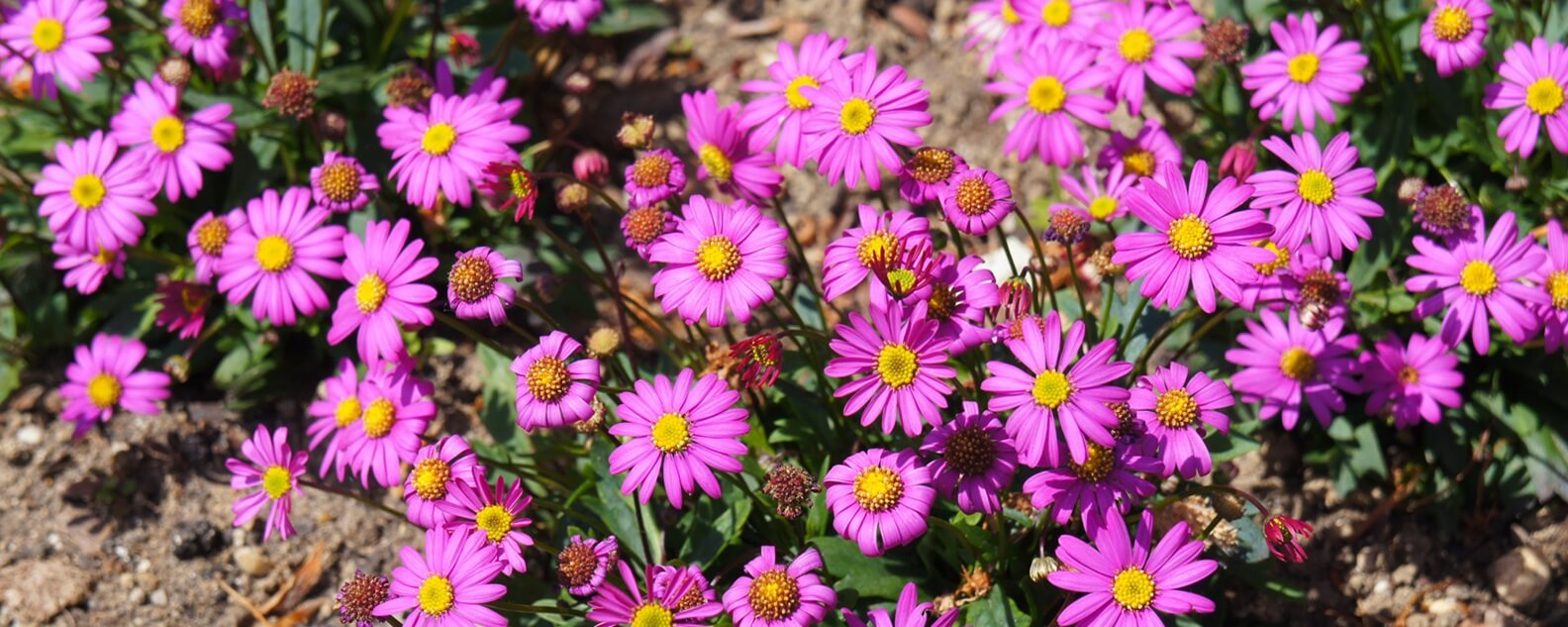
The iconic paper daisy spring display at the Australian Botanic Garden Mount Annan might be over for the year, but there is a sea of gorgeous Brachyscome flowers now taking centre stage and you can easily recreate the look at home.
Supervisor of Horticultural Development, Ryan Newett, shares his expert planting tips while working in the Connections Garden, where thousands of Brachycomes are planted each season to create colourful seasonal displays.
Discover these hardy Australian natives as they take centre stage until next year's paper daisy display.
Why choose Brachyscome?
These long-flowering Australian natives grow in diverse environments across the country, ranging from coastal dunes and open forests to grasslands, arid inland plains, and alpine, where they blanket the landscape in a vibrant carpet of colour and provide a valuable food source for pollinators throughout the warmer months.
Brachyscome are low-maintenance Australian native daisies loved for their masses of colourful blooms and long flowering season. Unlike annual flowers that need replacing every few months, many Brachyscome varieties can thrive for two to five years in the right conditions.
Perfect for garden beds, borders and pots, it attracts bees and butterflies while forming a beautiful groundcover. Well suited to a range of local conditions, it's an ideal choice for beginner gardeners looking for reliable colour with minimal fuss.
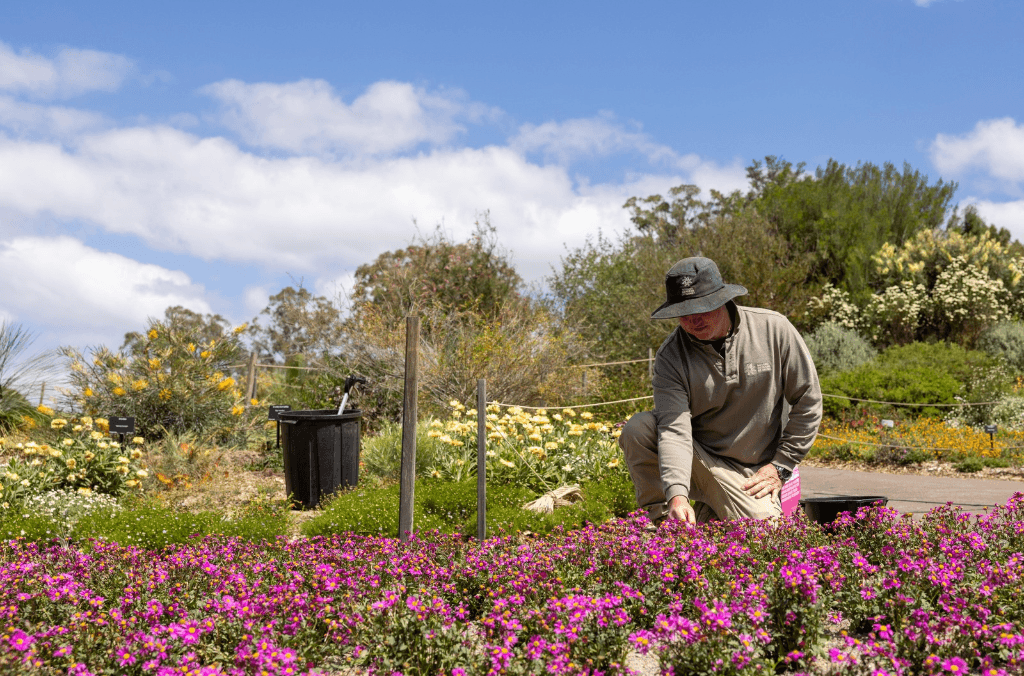
Horticulturalist Ryan Newett in the Connections Garden, Australian Botanic Garden Mount Annan planting native daises
How to Plant Brachyscome
Getting Brachyscome off to a strong start is all about good preparation.
| Step 1 - Prep the hole | Dig a hole about twice as wide as the nursery pot and the same depth to give roots room to establish. | |
| Step 2 - Check planting depth | Position the root ball so the top of the potting mix sits slightly above the surrounding soil level to improve drainage. | |
| Step 3 - Dunk before you plant | Before planting, Ryan's expert tip is to submerge the plant in a bucket of water while still in its pot until the air bubbles stop rising. This ensures the potting mix is fully saturated and the roots are well hydrated before planting. | |
| Step 4 - Position the plant | Remove the plant from its pot and position the root ball in the prepared hole. This helps the plant settle into its new position. | |
| Step 5 - Backfill and firm | Gently backfill with soil and firm it around the root ball. This provides support and good contact between the roots and surrounding soil. | |
| Step 6 - Water thoroughly | Water the plant in well after planting to help Brachyscome establish and settle in faster. |
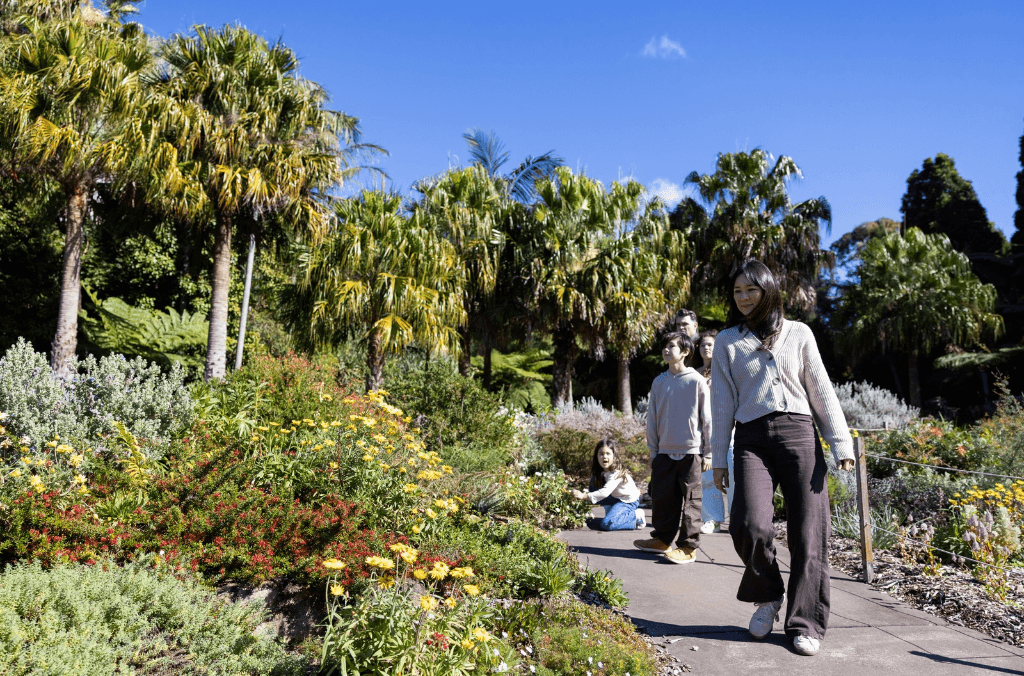
Discover an array of native plants in the Connections Garden, Australian Botanic Garden Mount Annan
How big does Brachyscome grow?
Small in stature but big on impact, the Brachyscome varieties planted in the Connections Garden at Mount Annan are expected to reach around 25-30cm tall and wide. As they mature, they'll grow together to form a dense blanket of flowers, creating a "carpet of colour".
See Brachyscomes in bloom this summer
At the Australian Botanic Garden Mount Annan, thousands of Brachyscome have been planted throughout the Connections Garden using a "painter's palette" design, featuring sweeping bands of colour across the garden beds.
You can expect to see a spectacular display of flowering native daisies transforming the Garden into a vibrant patchwork of colour all throughout the summer.

Growing Friends Plant Sales are open daily
Growing Friends Plant Sales
Feeling inspired to grow your own native daisy display? The Growing Friends Plant Sales at the Australian Botanic Garden Mount Annan are a great place to find Brachyscome and other unique Australian native plants. You can even tap into expert gardening knowledge and support the Garden's volunteer-run Growing Friends program.
Related stories
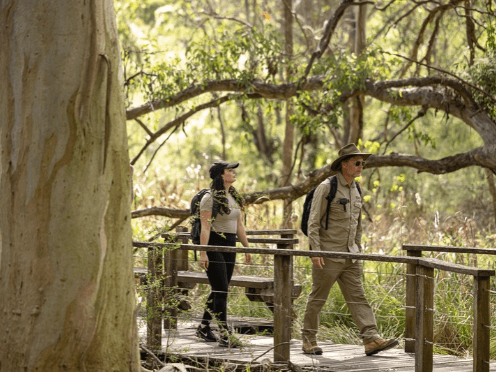
Peaceful walks or challenging trails, discover all the ways to explore Australia’s largest botanic garden.
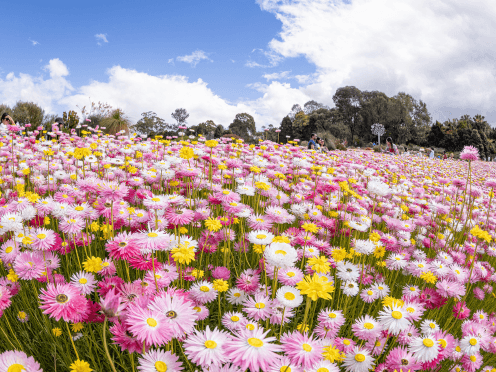
Discover the fascinating story behind Sydney's biggest paper daisy display and why these remarkable native flowers captivate visitors every year at Australian Botanic Garden Mount Annan.
In Antarctica’s frozen deserts, scientists are uncovering extraordinary fungi that survive where almost nothing else can, writes Professor Brett Summerell AM, Chief Scientist and Director Science, Education and Conservation.