About the Garden
The Cadi Jam Ora Garden was built between 1997-2001. It showcases native plants of this area and sits beside the site of the First European Garden on the continent of Australia. You're invited to take a seat and reflect on the first shared contact and history of the Cadigal people and those that arrived on the 11 boats from England and consider the significant changes to the Australian continent, which unfolded from this spot after 1788.
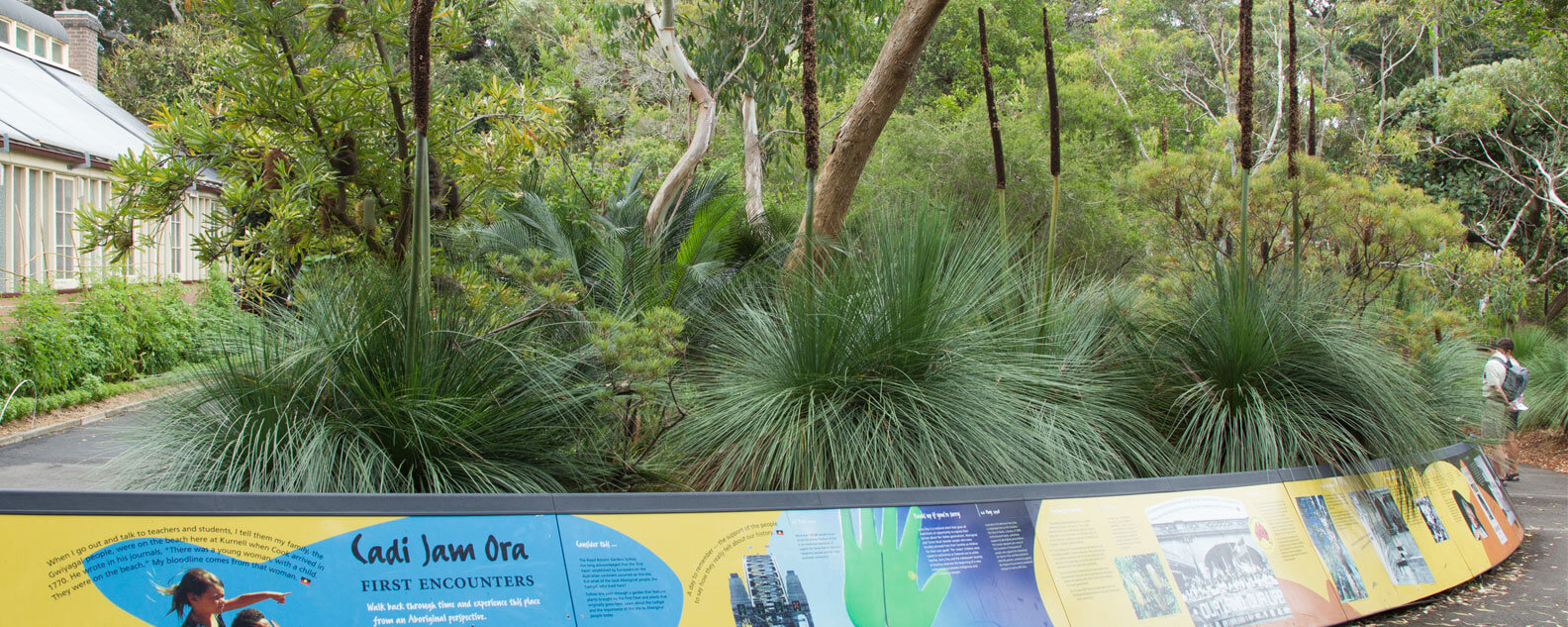
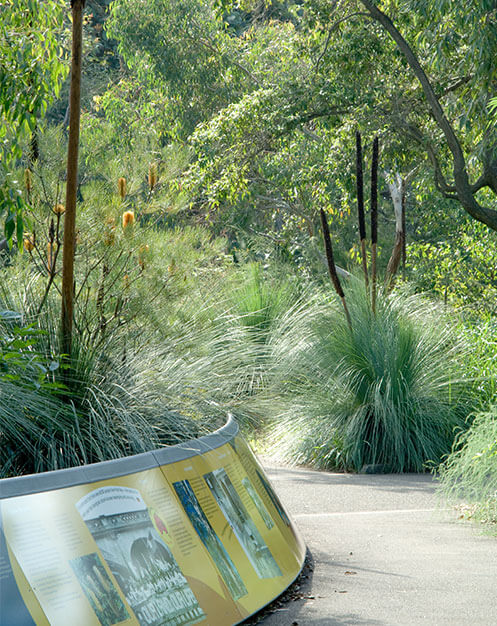
The Cadigal people and other Aboriginal communities had developed a complex relationship with the plants native to this site over tens of thousands of years. Gulgadya or Grass Trees (Xanthorrhoea spp) are not just striking and unique to look at, they were used by Aboriginal people to provide food and resources.
In contrast, the neighbouring First Farm shows plants that the colony attempted to grow here. The First Fleet transported seed and plants from England, the Canary Islands, Rio de Janeiro and Cape Town and it was on this site that the convicts cleared nine acres of land to plant them. Although the area became known as the First Farm, bountiful harvests were hard to come by. The convicts had trouble clearing the native forests, plants were sown according to northern hemisphere seasons, the climate was harsh and the ancient soils were nutrient deficient. You can see plants that tell this story, including bananas, cotton, wheat and the vegetables that we know they tried to grow here when you visit this garden.
In the centre of the garden, a large sandstone meeting area interrupts the straight lines that mark the layout of the footprint of the Garden as it was in 1816. The idea was to peel back one era of history to reveal and explore another, more ancient story, connection and voice that lives on in contemporary Australia.
About the First Encounters Storyline
The First Encounters storyline explored the relationship between people and plants on the site of the first connections between an Aboriginal cultural group, the Cadigal and the European settlement created by the convicts, marines and officers who arrived with the First Fleet in January, 1788.
The Cadi Jam Ora - First Encounters storyline shared 50 metres of stories with millions of visitors during its 26 years on site. It conveyed images and stories that spoke of both the Aboriginal history of Sydney and our shared history. Aboriginal people's voices were shared throughout the storyline, indicated by small Aboriginal flags. Their voices and stories added important culture, heritage context and insight to this historical record.
You will soon be able to view the trail-blazing Cadi Jam Ora - First Encounters story, in a digital archive of the panels.
On site in the Cadi Jam Ora First Nations precinct, you can now experience a renewed Gadigal Storyline which was unveiled in June 2026. Led by Culture, Country and guided by Gadigal/Bidjigal/Dharug/Yuin Elder and Traditional Descendant Aunty Rhonda Dixon-Grovenor from Sydney and Yuin/Bidjigal/Dharawal/Wailwan Elder and Traditional Descendant, Uncle Dean Kelly, deep listening, learning and truth-telling with First Nations People, the new story journey reveals inspired, revitalised stories of the Gadigal People, marana yurabirong, the first people of this place.