Tsubaki Yama: Camellia Mountain
Discover an internationally significant collection of camellias in a Japanese-inspired landscape.
See rare and beautiful species
In late 2025, the newest garden at Blue Mountains Botanic Garden Mount Tomah opened to the public. It’s called Tsubaki Yama, meaning ‘Camellia Mountain’ in Japanese, and it showcases a camellia collection of global significance.
It’s a project more than ten years in the making, supported in part by a generous bequest from a camellia-loving Wentworth Falls resident, Steve Jupp.
This living collection forms part of broader efforts to conserve global biodiversity. After six years of collecting and propagating, Tsubaki Yama brings together some of the most beautiful and rare camellias in the world. It includes species now extinct in the wild such as Camellia amplexicaulis, Camellia lucii and Franklinia alatamaha, as well as cultivars listed as critically endangered.
Experience species now extinct in the wild such as Camellia amplexicaulis, Camellia lucii and Franklinia alatamaha.

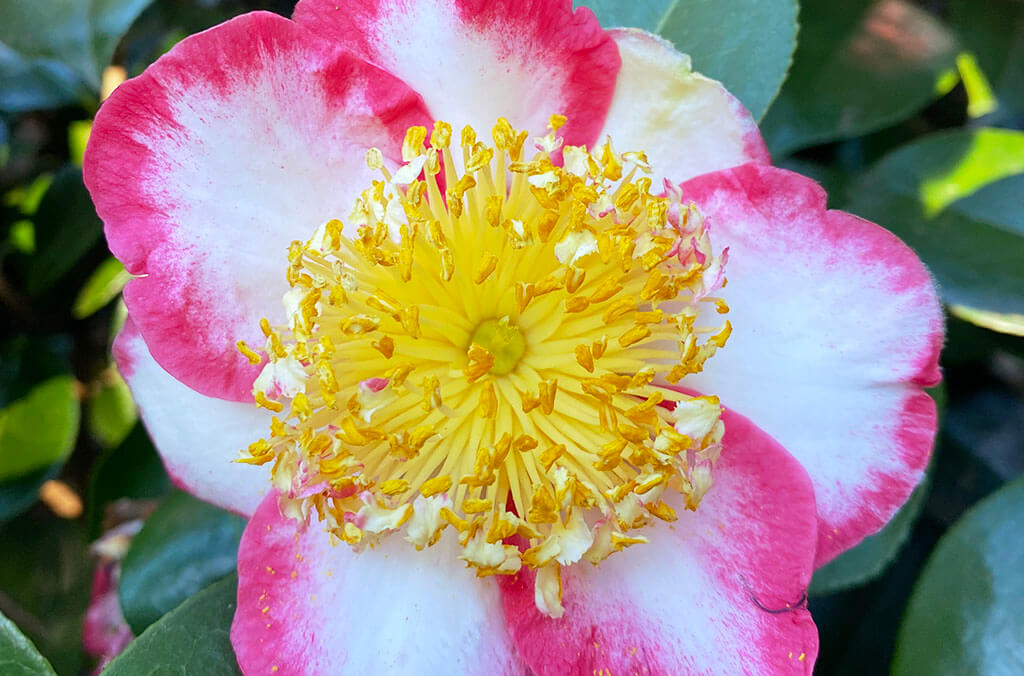
The slow growing and rare Higo camellia, Camellia japonica 'Okan' can be seen at Tsubaki Yama.
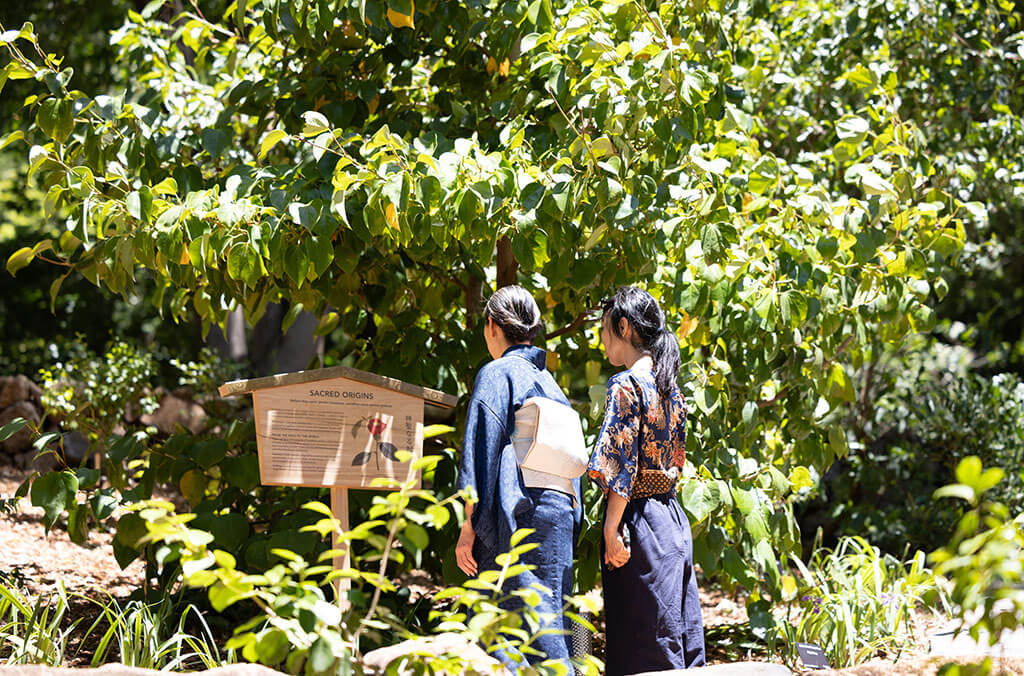
Members of Urasenke Sydney experiencing the garden, after demonstrating a Japanese tea ceremony at the opening of Tsubaki Yama.
Rich history, incredible resilience
The garden also contains rare Camellia japonica cultivars known as Higo camellias, originating from the old Japanese province of Higo. These cultivars are culturally significant. Each was tied to a specific family or clan during the Samurai era and planted at residences and gravesites. Tsubaki Yama’s Higos have been sourced from both Australian and international collections. This garden is a symbol of friendship and botanical connection between Nonoichi City in Japan and Sydney.
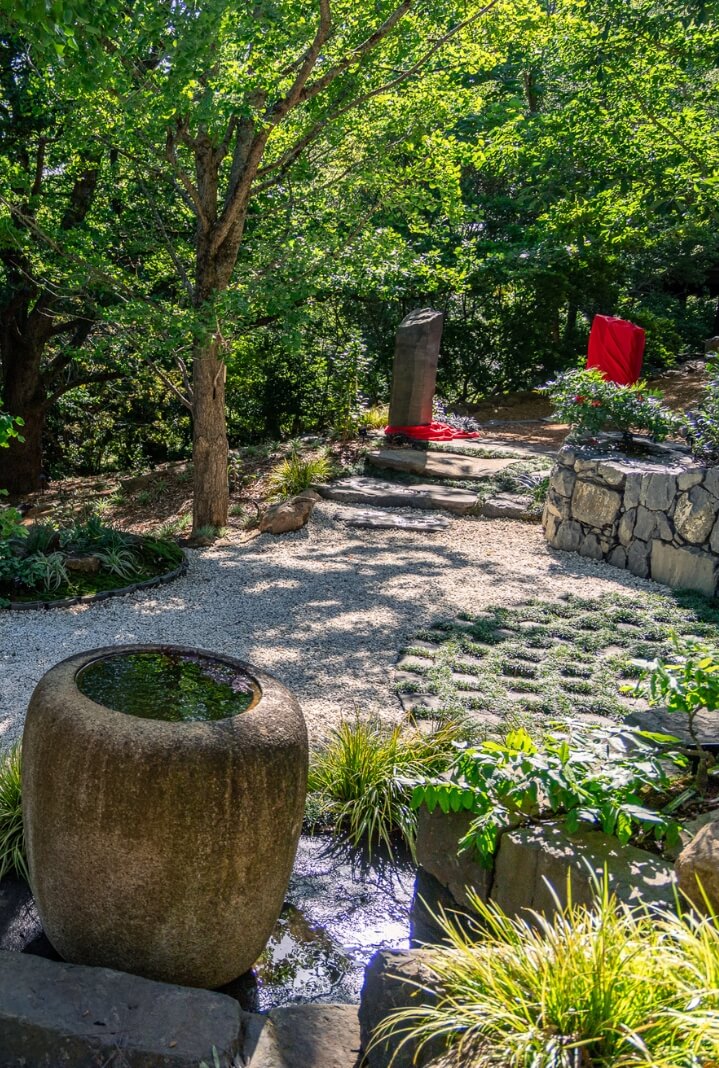
The garden’s design deepens the experience. Inspired by Japanese landscape traditions, Tsubaki Yama features Suiseki-style stone placements, Kyoto-sourced tea caddy urns, basalt columns carved from Mount Tomah’s volcanic rock, and a Hiroshima Ginkgo seedling grown from a tree that survived the atomic blast—a quiet symbol of resilience.
See a 'survivor tree' - a ginkgo seedling of a tree that survived the atomic bombing of Hiroshima.
An unforgettable experience
Beneath 30-year-old eucalypts now grows what may be the largest collection of Camellia reticulata in the Southern Hemisphere. These camellias can reach 15 metres and produce flowers the size of dinner plates (20cm in diameter). From the globally important Camellia sinensis (the source of green, black, white and oolong teas) to rare cool-temperate species, Tsubaki Yama presents an unparalleled diversity in a stunning setting.
As the garden settles into its new home, visitors will see the collection evolve season by season, revealing fresh layers of colour, texture and botanical interest throughout the year.
Whether you come for the rare plants found practically nowhere else, the gorgeous winter blooms, or simply to explore a beautiful new garden with sweeping mountain views, Tsubaki Yama is an experience you won’t soon forget.
Camellias, the Australian landscape and Japanese culture intertwine to create an immersive, captivating experience.

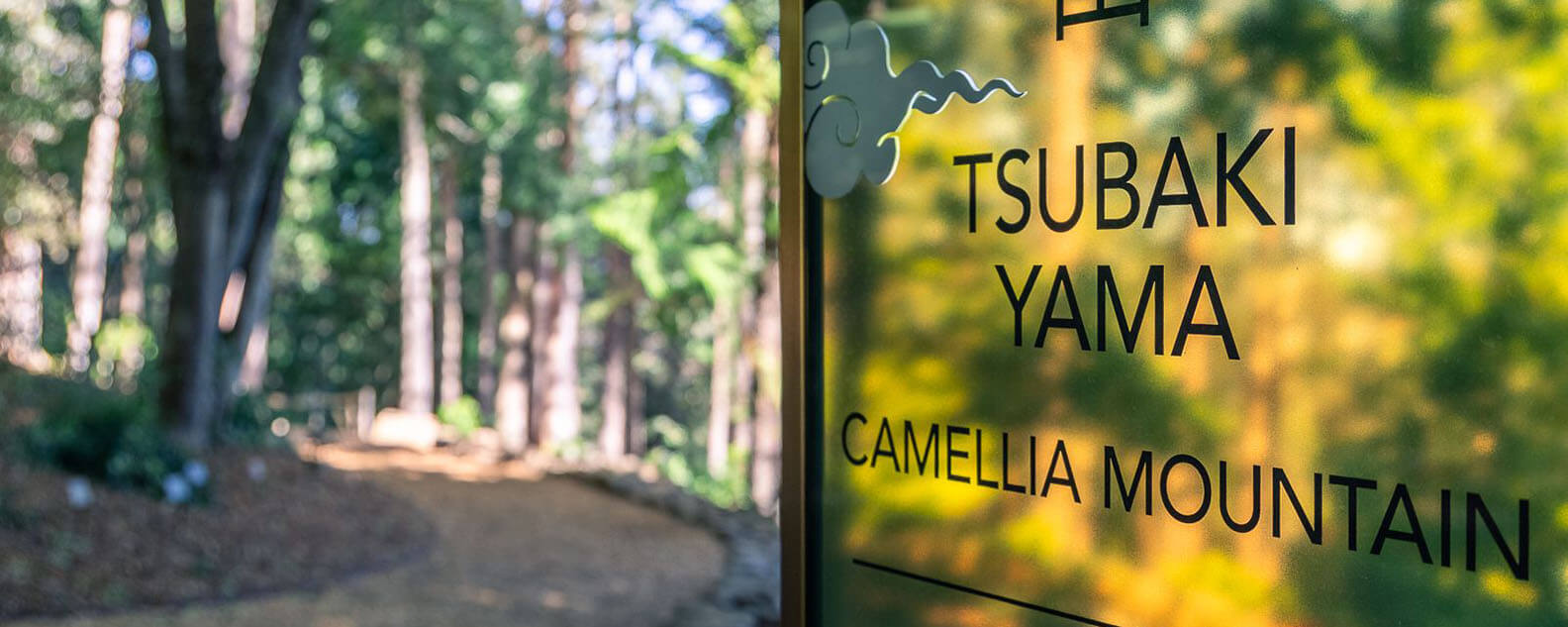
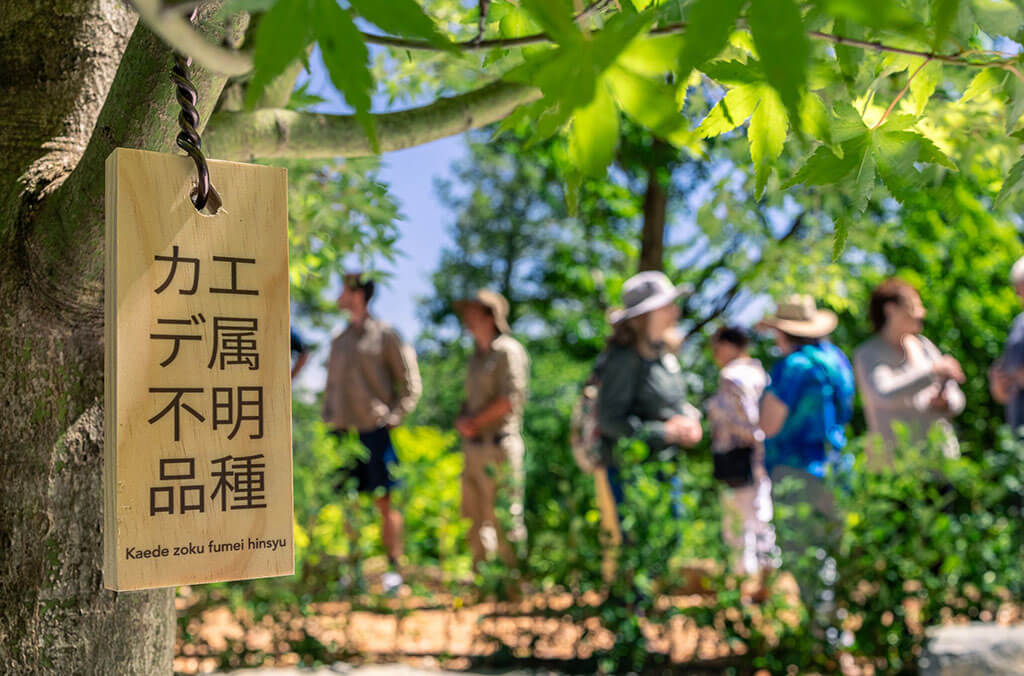
Signage in the garden evokes the deep cultural heritage of camellias in Japan.