Life against the odds
In Antarctica’s frozen deserts, scientists are uncovering extraordinary fungi that survive where almost nothing else can, writes Professor Brett Summerell AM, Chief Scientist and Director Science, Education and Conservation.
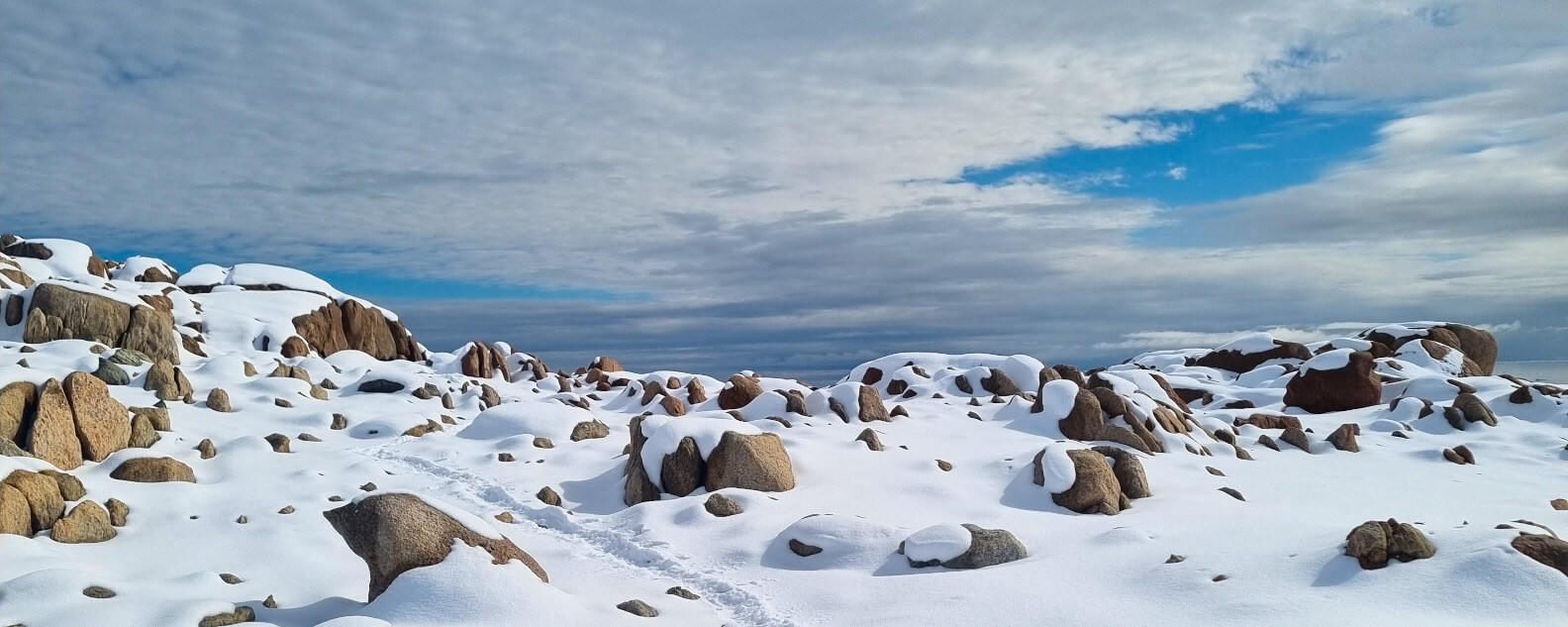
Antarctica is the coldest and driest of the continents on Earth, with conditions that prevent the existence and survival of most forms of life except those that are highly adapted to these conditions. One of those groups that can persist in these conditions are the various forms of micro-organisms, such as bacteria and fungi, which have a range of adaptations that allow them to persist in the dry freezing conditions of Antarctica. These organisms are known as psychrophiles – literally cold-loving forms of life.
Surviving extreme conditions
Over the last few years I have been involved in a project led by Professor Belinda Ferrari at the University of New South Wales to begin to better understand the species of micro-fungi – which you may know as moulds – that inhabit Antarctica, to describe and name them and to document their adaptive ability to survive these extreme conditions. The results to date are fascinating, to say the least, and are asking as many questions as they are answering.
Fortunately we have an excellent team of two research fellows – Xabier Vázquez-Campos and Nathali Machado de Lima – and five PhD students – Jordan Vink, Priyanka Rani Majumdar, Sylvie Nolf, Angad Vinay Bakshi and Liam Hewitt – to share the load and contribute to the outcomes of the research.
Generally fungi exhibit greater resilience than bacteria, enabling enhanced survival in inhospitable environments. Their remarkable ecological adaptability is supported by physiological and morphological changes, including thickened and melanised (blackened) cell walls, as well as the production of diverse secondary metabolites, such as UV protectant carotenoids and related chemicals.
These adaptations enable them to withstand prolonged desiccation and intense solar radiation. In cold environments, such as the deserts of Antarctica, fungi tolerate high solar radiation, recurrent freeze-thaw cycles, osmotic stress and a scarcity of water and nutrients. In short, they have tremendous ability to withstand the extremes of the Antarctic conditions.
A hidden world
Our work has focused on one site, Robinson Ridge, a rocky, seasonally ice-free area located on a small peninsula near the coast of the Windmill Islands region of East Antarctica. The site is situated less than 10 km south of the closest major Australian research facility, Casey Station, and contains unique mosses and lichens that are able to grow for the few months each year when conditions are ‘mild’ enough to allow growth. The rest of the year is a case of survival.
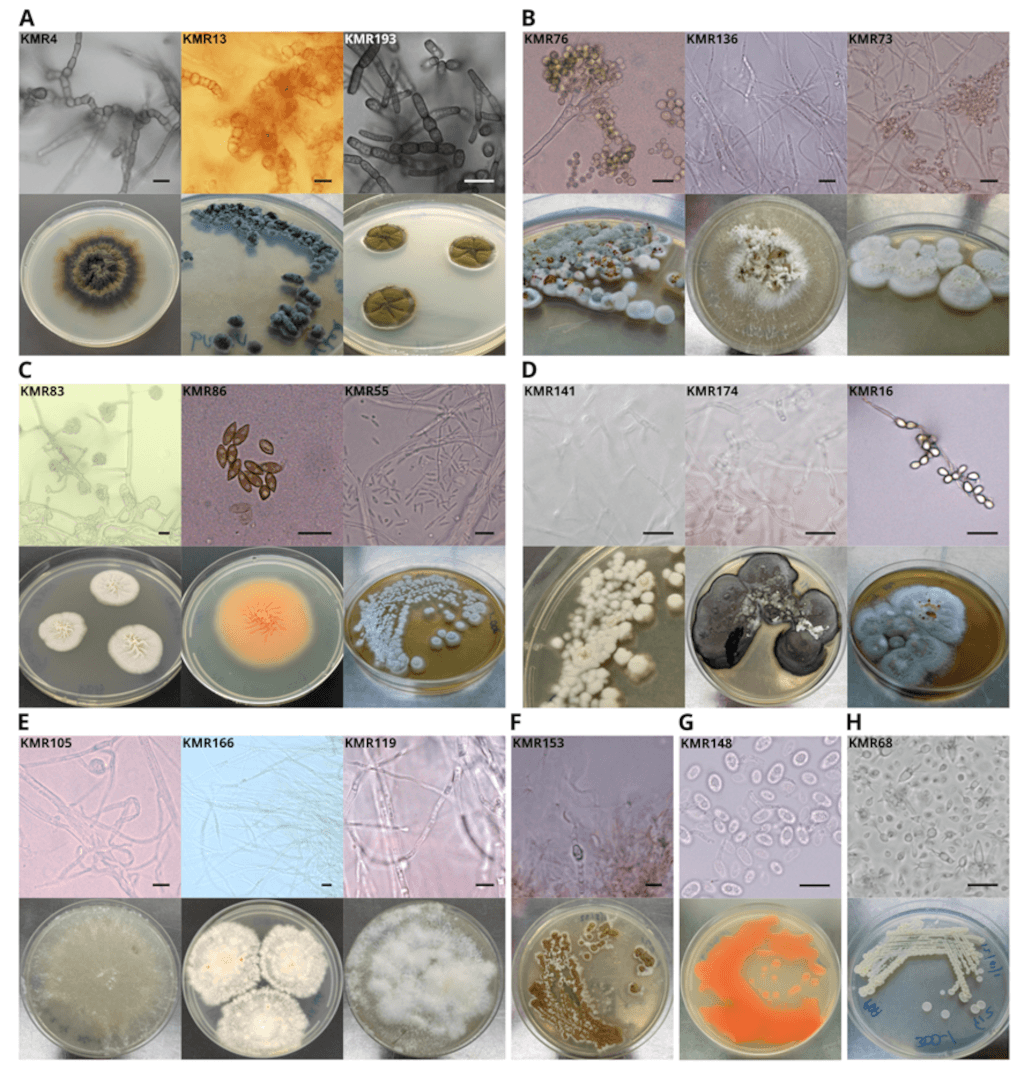
Initial work involving both culturing and environmental DNA analysis from the “soil” showed a huge diversity of fungi was present across a range of different fungal groups. Those species which were able to be cultured – grown on agar gel (a seaweed gel commonly used in cooking) in the lab – and which could then be analysed in more detail turned out to be – more often than not – undescribed species.
Identifying a new species
The process of describing a new species of fungi is complex, especially for micro-fungi. Firstly it is necessary to grow the fungus on a range of different agar media – each with a different combination of nutrients that might best favour growth and different morphological features – and to expose them to different temperature ranges.
Surprisingly for many of the species they often grew best at 15-20°C – temperatures they never experience. Detailed microscopy and photomicrography is necessary to describe cell shape, colour and other features to prepare the description.
Most taxonomic descriptions nowadays rely on the use of DNA analysis, and this is especially true of microfungi. The range of visual features available, even down a microscope, are often limited and so it is necessary to use differences in DNA sequences of various genes to tell one from another – or a new species from existing described species.
Documenting life underground
We have started this process and have nearly 30 new species descriptions currently underway, with one new species, a species of Penicillium (Penicillium psychroflourescens) already described and published. Many of the new species are what are known as black fungi – heavily pigmented and melanised species, often with thick walls, and are well adapted to surviving the extreme conditions of Antarctica. Many of the species are just not new species, but are new genera and even belong to new families, highlighting the uniqueness of these fungi.
We have focused on generating full genomes of many of these fungi and using various techniques to understand what parts of the genome are active and switched on when the fungus is stressed by various factors such as UV exposure or exposure to environmental pollutants. There is a lot of interest in the ability of these fungi to be metabolically active in extreme conditions and the potential application to industrial processes or remediation of polluted sites.
Together with other microorganisms, these fungi mediate the cycling of key elements such as nitrogen and carbon. Despite all this remarkable capacity, fungi remain one of the least explored components of the biota in terrestrial Antarctica, with the culturable fraction being lower than in temperate soils. This gap represents a fundamental impediment to understanding the microbial ecology and biotechnological potential of fungi in cold deserts.
This work highlights how little we know about life underground – there are literally millions of species still left to be documented and described, especially in some of the planet’s least explored regions.
This story first appeared in The Gardens, the quarterly magazine for members of Foundation & Friends of the Botanic Gardens. Become a member to receive the magazine and enjoy a closer connection to the people, plants and research shaping the future of the Gardens.
Help bring plants, people and conservation together
Research like this helps us better understand the extraordinary diversity of life on Earth and how species survive in some of the planet’s most extreme environments.
Your support helps Foundation & Friends of the Botanic Gardens contribute to the vital scientific, conservation and education work of Botanic Gardens of Sydney.
Related stories
Discover the fascinating story behind Sydney's biggest paper daisy display and why these remarkable native flowers captivate visitors every year at Australian Botanic Garden Mount Annan.
Come behind the scenes on a botanical journey to preserve the first ever corpse flower in the National Herbarium of New South Wales.
Winter 2026 marks the first flowering of ‘Tsubaki Yama: Camellia Mountain’, the newest garden in Blue Mountains Botanic Gardens Mount Tomah, and there's so much to enjoy.