Myrtle rust resistant restoration of broad–leaved paperbark
A molecular tool could change the future of broad-leaved paperbark, allowing scientists to identify myrtle rust–resistant trees and restore threatened landscapes more effectively.
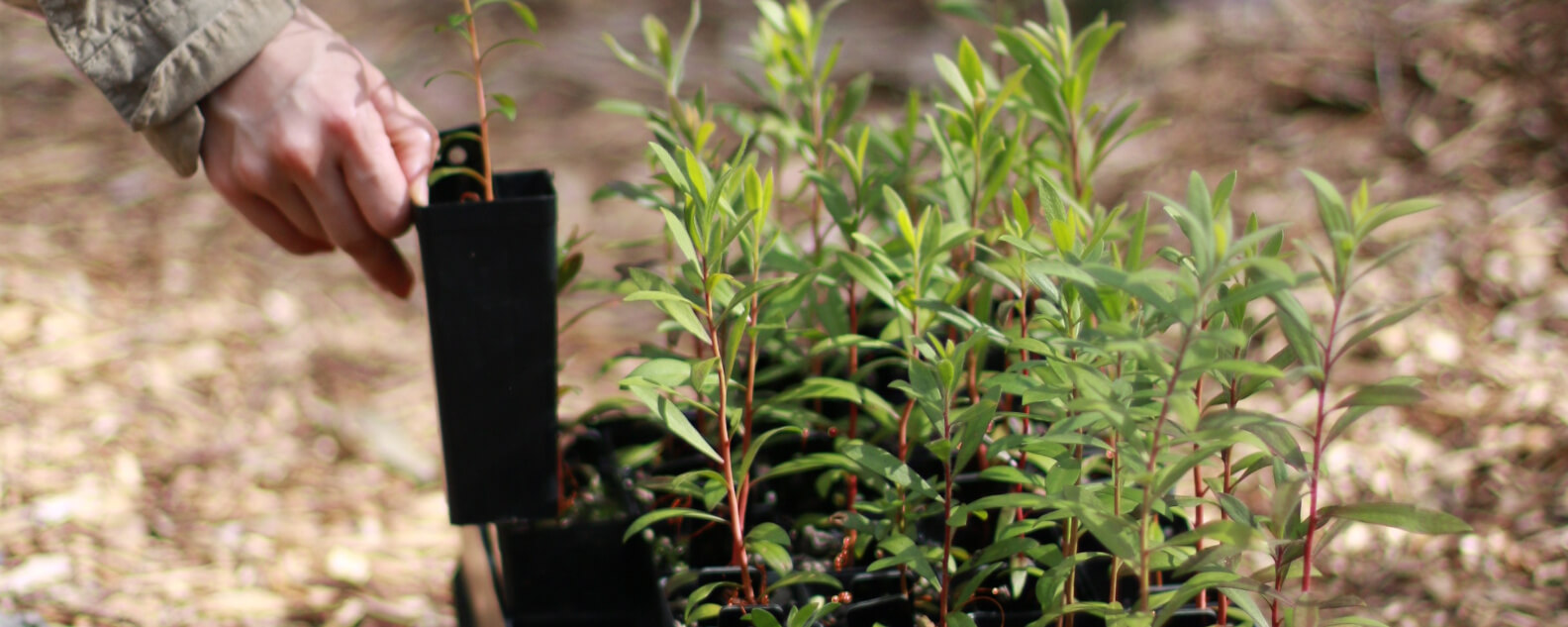
Thirty years ago, volunteer Steve Wisniewski planted 4,500 broad-leaved paperbarks at the Hunter Wetlands Centre. Established on a former rugby field and dumping ground, these trees now form a mature swamp forest. Unfortunately, if the same restoration were attempted today, it is unlikely to be so successful due to the devastating impact of myrtle rust.
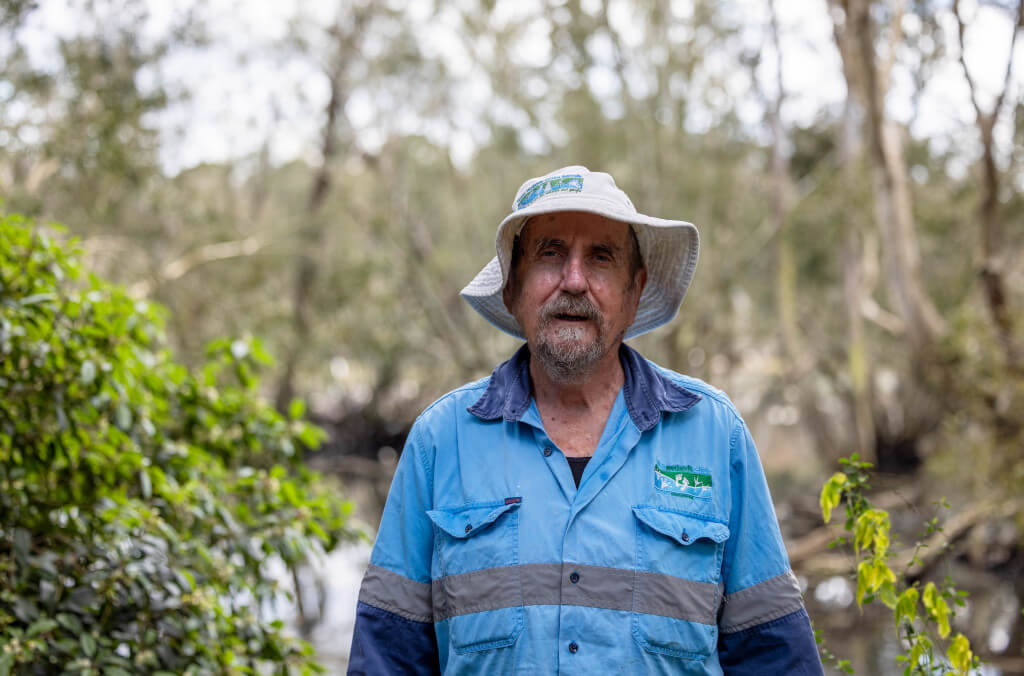
Hunter Wetlands Centre volunteer Steve Wisniewski
Steve and other volunteers had to contend with drought, grazing by hares and weed invasion. They protected the new plantings by installing a hare exclusion fence, hand watered with buckets and have been controlling lantana, kikuyu and other environmental weeds ever since.
These are all threats that could be overcome with hard work. But myrtle rust is different, we don’t yet have the tools to be able to prevent its devastation. Thankfully, the Research Centre for Ecosystem Resilience (ReCER) is on track to developing a molecular tool that will enable restoration practitioners to source seed stock that is resistant to myrtle rust.
Myrtle rust and its impact on restoration success
Myrtle rust is a plant disease caused by the exotic fungus Austropuccinia psidii. It was first detected in Australia in 2010 and is now threatening the survival of dozens of Australian native plant species. The fungus with bright yellow spores infects new growth in a range of species belonging to the Myrtaceae family, a large plant family that includes eucalyptus (gum trees), melaleuca (paperbarks), and syzygium (lilli pillies). This targeting of new growth makes the fungus especially devastating for restoration plantings. When myrtle rust destroys new growth, young plants struggle to establish, which doesn’t bode well for the success of habitat restoration efforts.
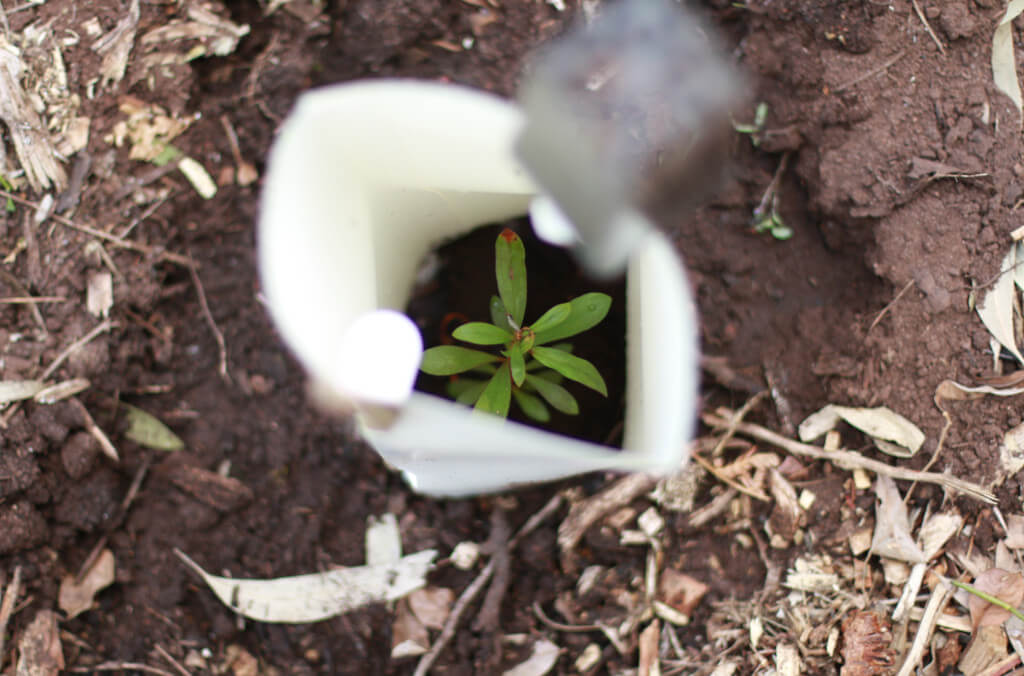
A broad–leaved paperbark planting showing early signs of myrtle rust infection.
“I’m not sure we would have the same success if we undertook these plantings today, now that myrtle rust is here,” - Steve.
Restoration practitioners don’t yet have the tools to be able to prevent myrtle rust from devastating their plantings, but hopefully that will soon change.
Not all species or plants within species are equally susceptible to myrtle rust. Some species, like the once common native guava and scrub turpentine, have become critically endangered in the wild because most individuals are highly susceptible. Whereas other species, like the broad-leaved paperbark Melaleuca quinquenervia, exhibit varying susceptibility to myrtle rust.
Identifying genetic markers for resistance
Knowing which seed sources, or mother trees, typically exhibit high resistance to myrtle rust, will ultimately allow restoration practitioners to source seed and nursery plants that are known to be highly resistant.
Karina Guo is a Technical Officer Biodiversity Genomics at the Botanic Gardens of Sydney. A key focus of Karina Guo’s PhD research, in collaboration with ReCER and the University of Sydney, is to develop a molecular assay, or simple genetic test, that can be used to identify and select resistant Melaleuca quinquenervia individuals and seed lots for restoration.
“We planted out a mass of seedlings in the nursery from a range of sources, infected them with myrtle rust, and recorded how susceptible each was to the disease. we then sequenced the full genome of all these plants and found genetic markers, or specific DNA sequences at a particular location in the genome, that seem to be highly predictive of whether a plant is resistant to myrtle rust.” - Karina
Field testing genetic markers
The molecular assay for myrtle rust is now being field tested, with on-ground help from a range of collaborators including Lake Macquarie Landcare and Hunter Wetland Centre.
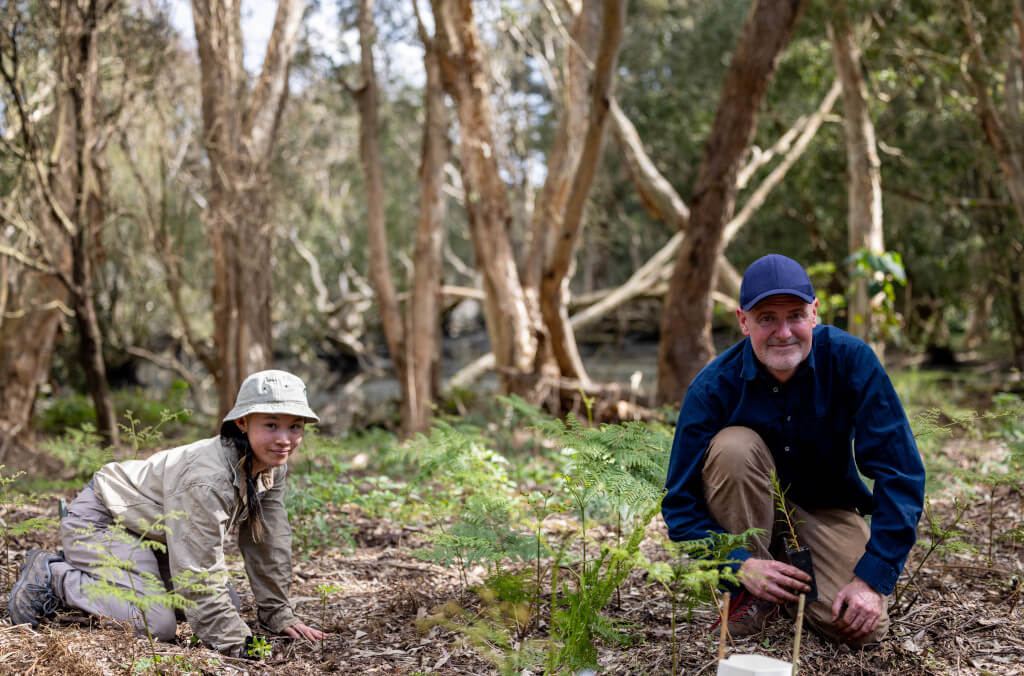
Karina Guo and Jason Bragg planting broad-leaved paperbark that have been molecular assayed for myrtle rust resistance.
“We grew a second batch of seedlings, used our molecular assay to predict their susceptibility to myrtle rust, and planted them in the wild at Cattai Wetlands site and Hunter Wetland Centre.” Karina says.
“The amount of support we have received from our collaborators has been incredible, with our partners preparing the sites and taking care of ongoing watering and weeding. They’re keen to be part of a project that will hopefully one day help them protect the ecosystems they manage from myrtle rust.”
Unlike the nursery plantings, when plants were infected with myrtle rust, this time there’s no need. Myrtle rust is now widespread and established in much of New South Wales, and it didn’t take long for the plantings show signs of myrtle rust.
Almost 800 seedlings have been planted. Karina, and a team of colleagues and volunteers, are monitoring the plants every month for the next year, documenting their health, growth, and response to myrtle rust.
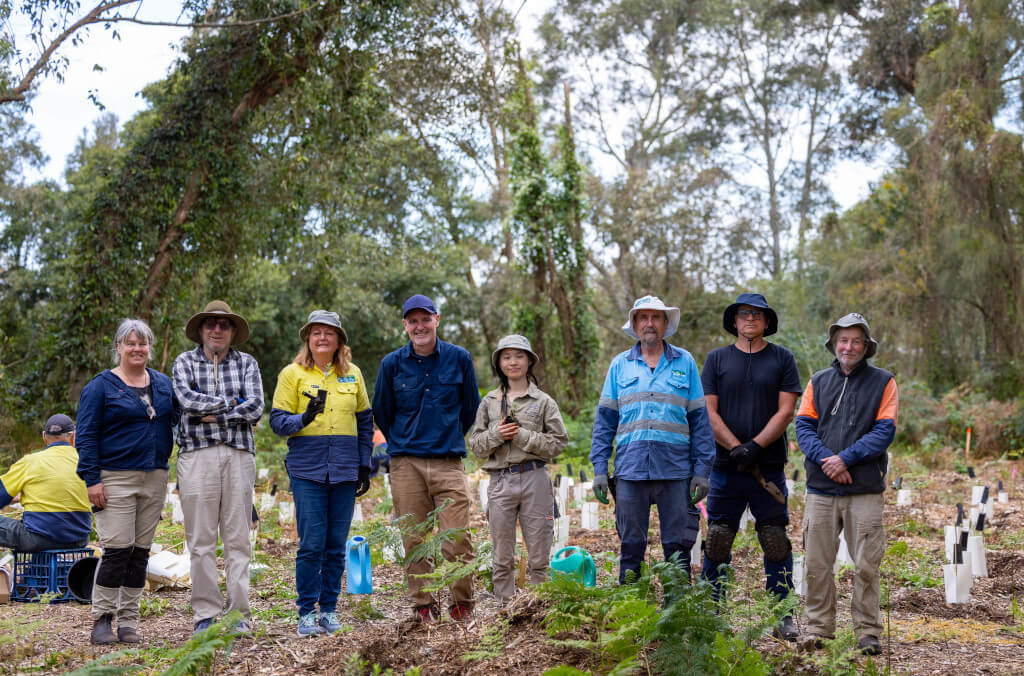
Karina Guo (centre), Jason Bragg (fourth from left), and Steve Wisniewski (third from right) and other volunteers and collaborators from the Hunter Wetlands Centre and Botanic Gardens of Sydney at a broad-leaved paperbark planting day.
Resilience is as important as resistance
It’s not only resistance to myrtle rust that is considered when developing a mix of seed for use in ecological restoration. Jason Bragg is a Senior Research Scientist at ReCER and Karina’s PhD supervisor. He is leading a team undertaking research on multiple species threatened by myrtle rust and has an interest in ensuring plant collections and material used in restoration retains the potential to adapt to other diseases and environmental change.
“It is important that we don’t create seed collections that are resistant to myrtle rust, but not resilient to other diseases and change,” Jason says. “We do this by maximising genetic diversity and making sure it is representative of wild populations.”
Genetic diversity maximises adaptive potential. Adaptive potential is a population’s capacity to adjust to changing environmental conditions. The higher the genetic diversity within a population, the greater the probability that at least some individuals will possess a trait that facilitates adaptation, for example, to climate change, the presence of diseases such as phytophthora and other unknown future threats.
Inspiring action
Steve hasn’t seen seedling recruitment in the broad-leaved paperbarks at the Hunter Wetlands Centre for a while. And a more recent planting, around ten years ago, failed entirely.
“They were looking fantastic. But then I noticed the new growth curl up and die off. We ultimately lost the lot. They were all stressed out with the rust,” Steve says. He is excited about one day being able to introduce individuals with the myrtle rust resistant gene that will cross pollinate with the trees he planted 30 years ago.
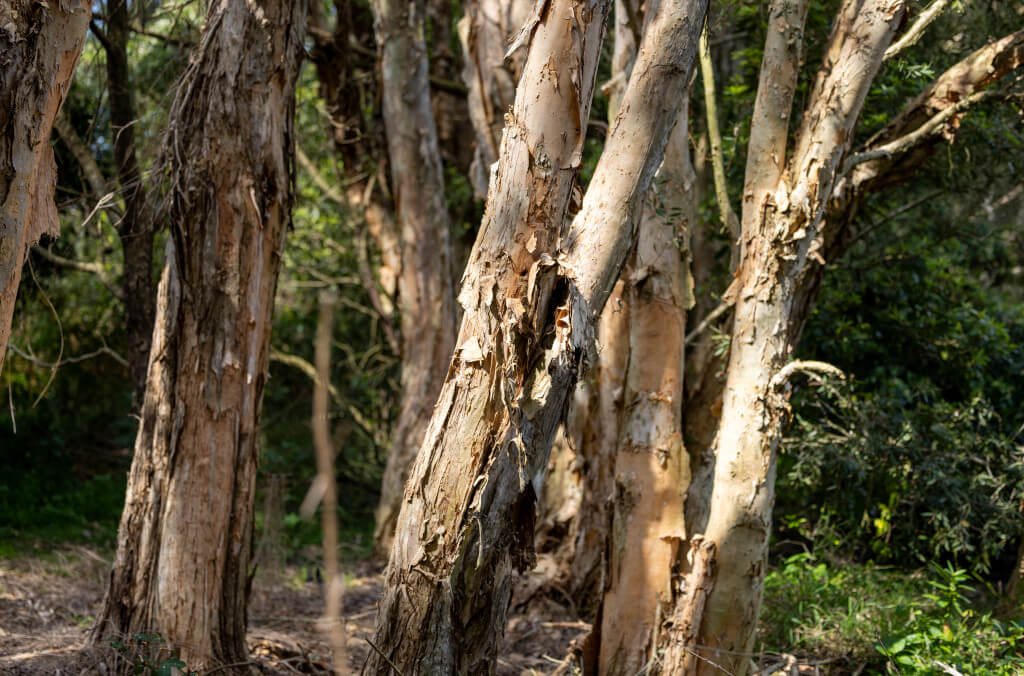
Broad-leaved paperbark trees that Steve Wisniewski planted at the Hunter Wetlands Centre 30 years ago.
“We might get a bit of pollen from one of the disease resistant plants pollinating one of the [established] trees,” Steve says. He’s excited and bubbling with enthusiasm and I see firsthand the playing out of Karina’s objective that her research bridges the gap between application and science, inspiring action rather than breeding despair.
More great stories like this feature in The Gardens magazine, the member magazine for Foundation and Friends of the Botanic Gardens. Join the community that supports and raises funds for Botanic Gardens of Sydney.