Tracking seed provenance
The value of wild-collected seed for conservation and restoration depends on accurate provenance information. A mobile phone app is helping collectors capture high-quality data quickly and accurately in the field.
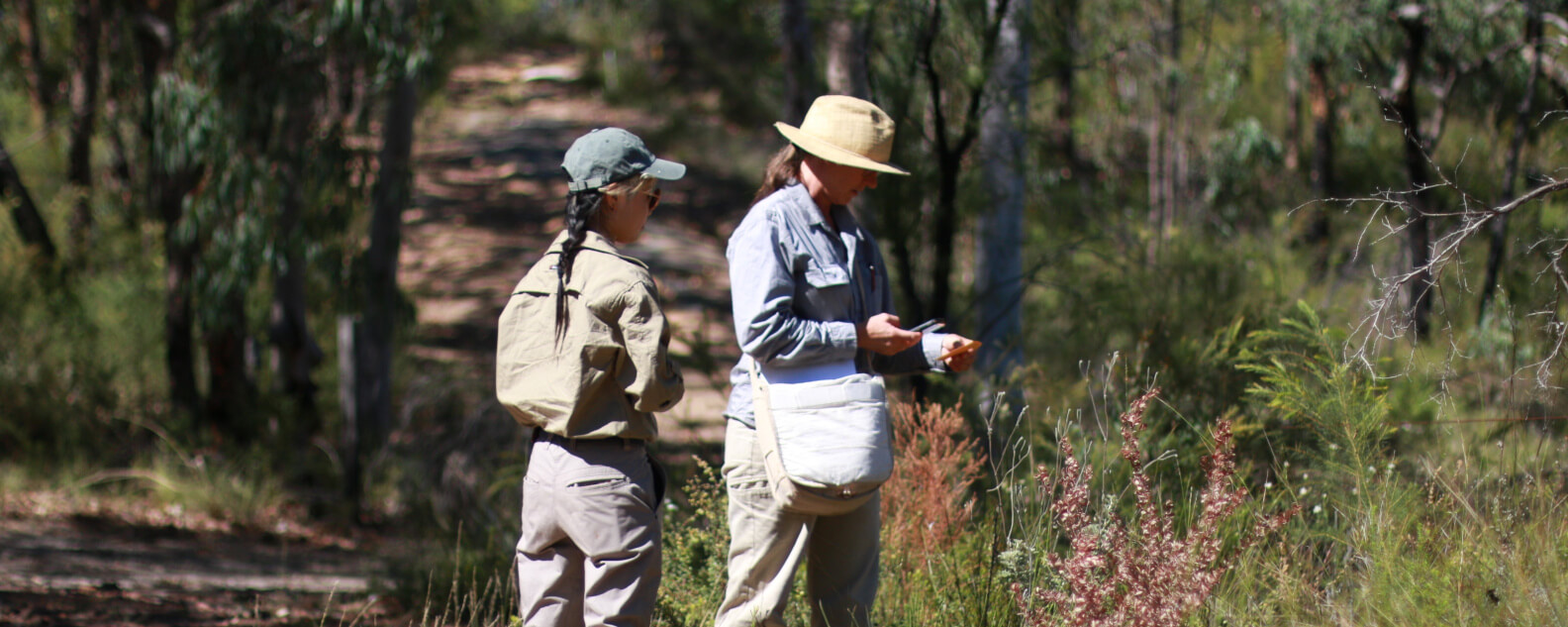
A mobile phone app developed by the Research Centre for Ecosystem Resilience is helping the Seedbank and Conservation collections team, along with other organisations such as the Big Scrub Rainforest Conservancy, capture high-quality provenance data quickly and accurately in the field.
Wild-sourced seed is a limited resource, so it is important to maximise its value for conservation and ecological restoration. Without comprehensive and accurate provenance information, its potential uses can be limited. The ReCER Field Collection app, initially developed to collect metadata for leaf samples destined for DNA analysis, has been updated to meet the needs of seed collectors, making it easier to capture this critical information in the field and helping to ensure collections can be used to their full potential.
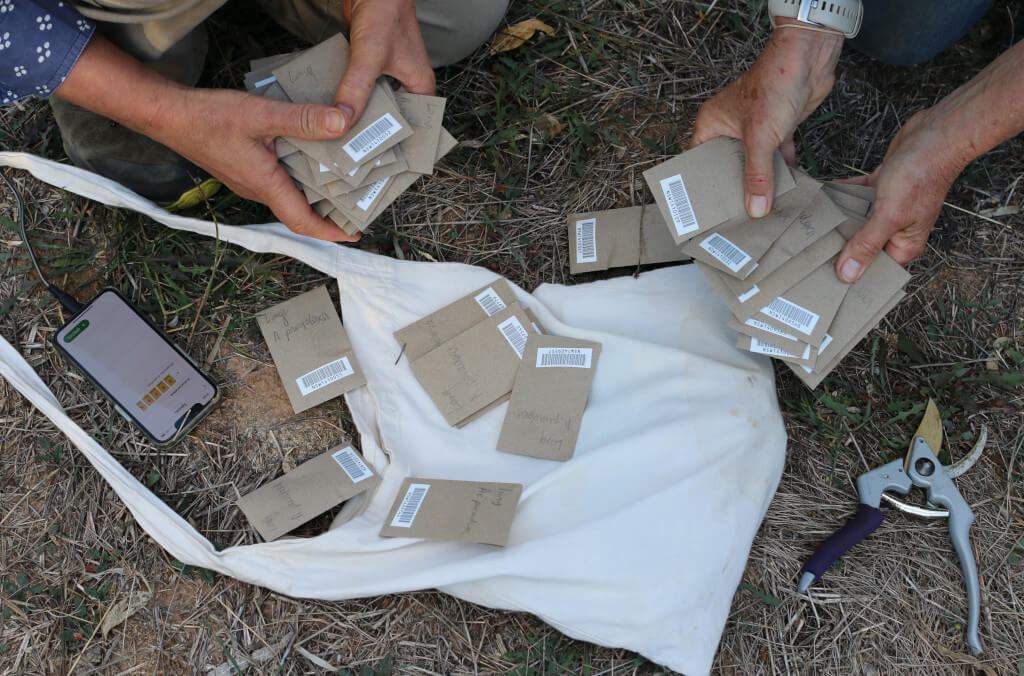
Leaf samples collected for genetic analysis, packaged in barcoded envelopes. Important information about where each sample was collected from was recorded with the ReCER Field Collections app.
Collecting metadata in the field made easy
Marlien van der Merwe is a Senior Research Scientist at the Research Centre for Ecosystem resilience (ReCER) and part of the team that developed the ReCER Field Collection app, a mobile phone application that enables collectors to accurately record field data associated with samples using a smartphone.
“The ReCER team and our collaborators collect hundreds of leaf samples for genetic analysis each month,” Marlien says. “The collection app enables us to readily record important information in the field, including location and habitat information. We may visit a site for an hour or so and, in that time, collect leaf samples from dozens of plants. Accurately recording where each sample was collected would be time-consuming, and perhaps logistically impossible, without the app.”
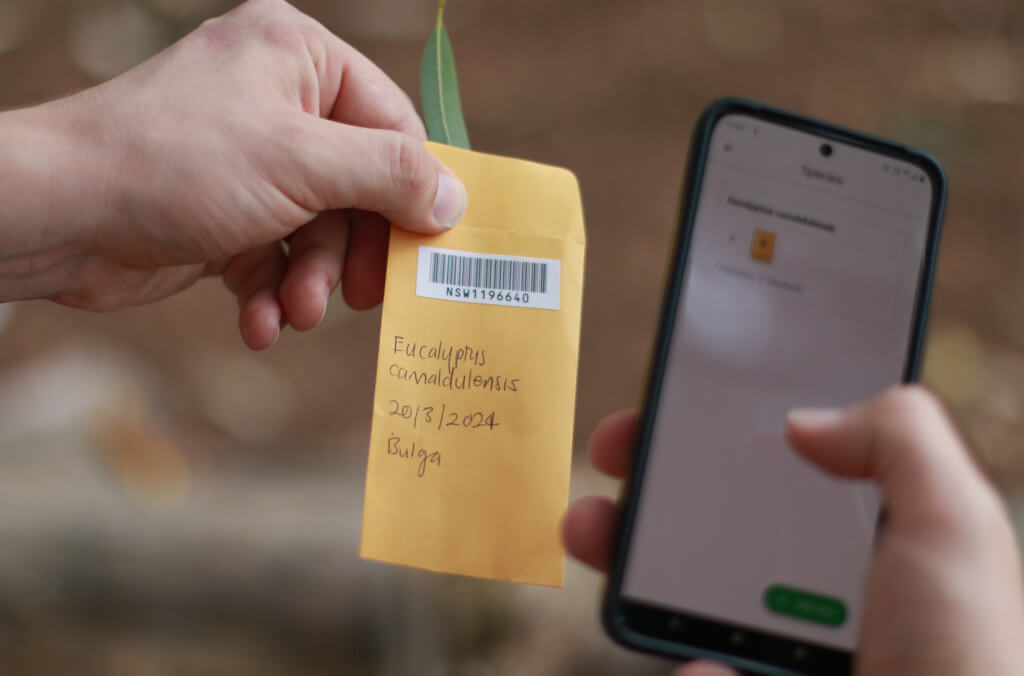
A unique number applied at collection is captured in seconds by a barcode reader within the app.
“Taking advantage of the inbuilt GPS in mobile devices and recording information directly in the app at the time of collection is efficient and reduces errors that can happen when transcribing from field notebooks,” says Marlien.
The app is an important part of the genomic knowledge infrastructure developed by ReCER that ensures the collection, management, sequencing and analysis of a large number of samples is easily managed. To date, leaf samples have been collected from more than 101,000 plants across eastern Australia, supporting the conservation of threatened flora and guiding seed sourcing for resilient restoration through the Restore and Renew webtool. Each sample is assigned a unique number that is retained through every stage in the process, from field collection and DNA extraction through to sequencing and analysis.
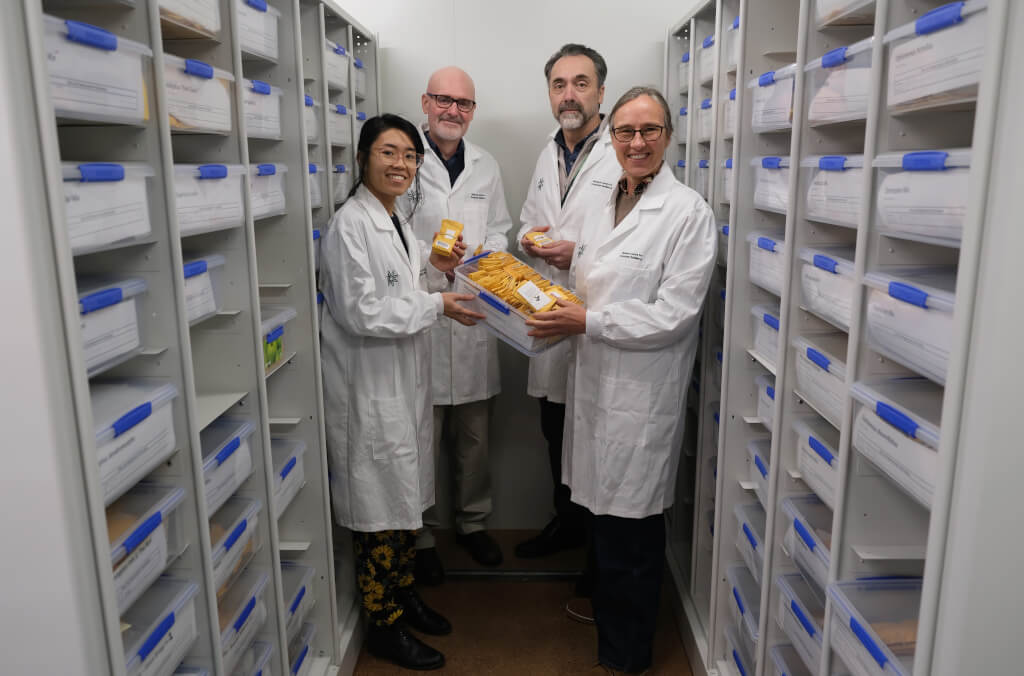
ReCER team members, from left to right, Samantha Yap, Jason Bragg, Maurizio Rossetto, and Marlien van der Merwe with some of the thousands of leaf samples collected from across the east coast of Australia.
App upgraded to accommodate seed data
Given how well the app worked for collecting field data for genetic samples, it wasn’t long before the Seedbank and Conservation Collections team recognised its potential for seed collection.
Nathan Emery manages the Seedbank and Conservation Collections team at the Botanic Gardens of Sydney and requested additional fields, extended functionality and enhanced data export structures to support the team's seed collection workflows.
“Good seed collections must be paired with high-quality data,” Nathan says. “Using a digital workflow like the app helps maintain data quality by ensuring collection records are standardised and that all minimum data requirements are met.”
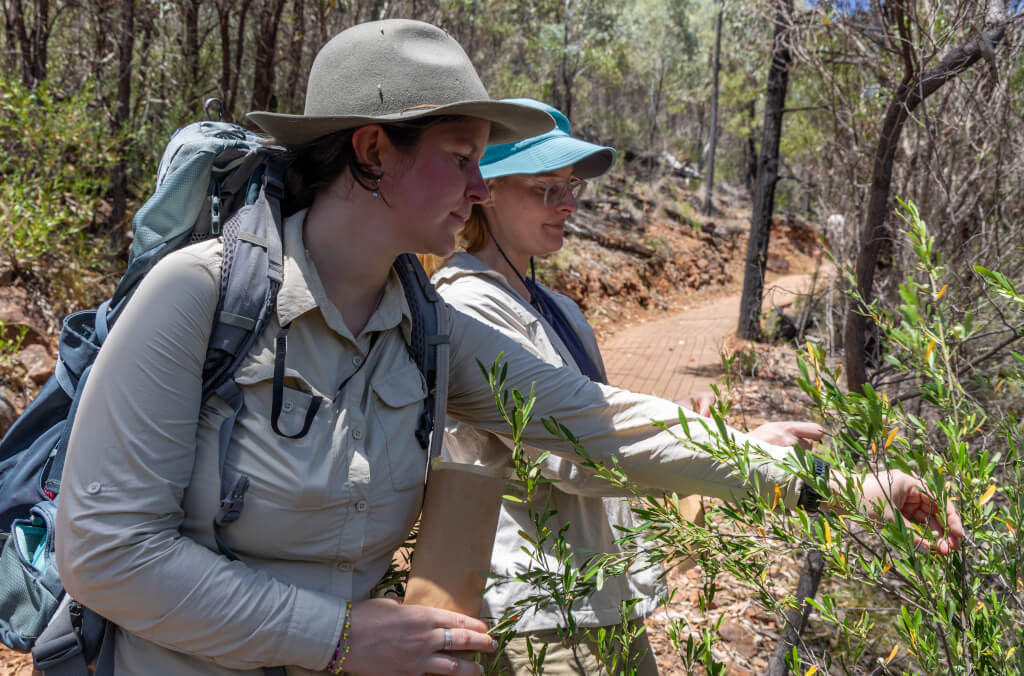
Seedbank and Conservation Collections team members Laura Watts and Alex Thomsen collecting seed from Beyeria viscosa plants.
The app has also streamlined the submission process for external seed collectors. By capturing required data in a standardised format in the field, collection records can be reviewed more efficiently, reducing the need for follow-up queries, manual transcription and data cleaning before seeds enter the PlantBank workflow.
These data are critical to the long-term value and usability of seed collections. Data gaps can limit important conservation applications, including translocation and restoration projects. The app also provides a workflow for capturing maternal seed lines, which can be linked to associated genetic samples.
“Maternal seed collections can improve the genetic integrity of our seed collections, which is particularly important for threatened species and situations where maternal plant tracking is required,” Nathan explains. “The app allows us to collect these associated data far more efficiently than we could previously.”
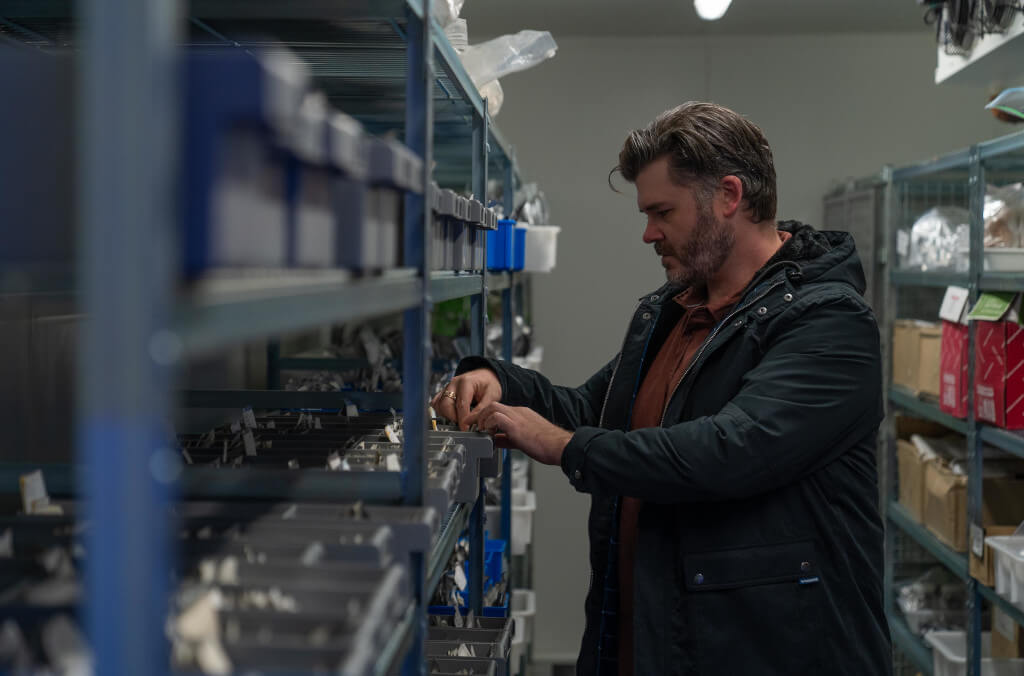
Seedbank and Conservation Collections manager Nathan Emery with some of the approximately 14,000 seed accessions stored at the Australian PlantBank.
Anyone can use the app for free
The app can be freely downloaded by anyone to collect seed provenance data. It is now being used well beyond the Botanic Gardens of Sydney, including by community groups, Saving our Species officers, commercial seed collectors and restoration practitioners. Field data recorded in the app is returned to the user as a digital file (.csv) via a nominated email address.
Renee Borrow is General Manager of the Big Scrub Rainforest Conservancy, an organisation that uses the app to document provenance data when collecting seed and cuttings for its Science Saving Rainforest program.
“We’re creating a genetically diverse seed production area for 60 rainforest tree species. We are bringing together carefully chosen propagules to create a living seedbank plantation that will produce genetically diverse seed for restoration plantings to restore critically endangered lowland subtropical rainforest,” says Renee.
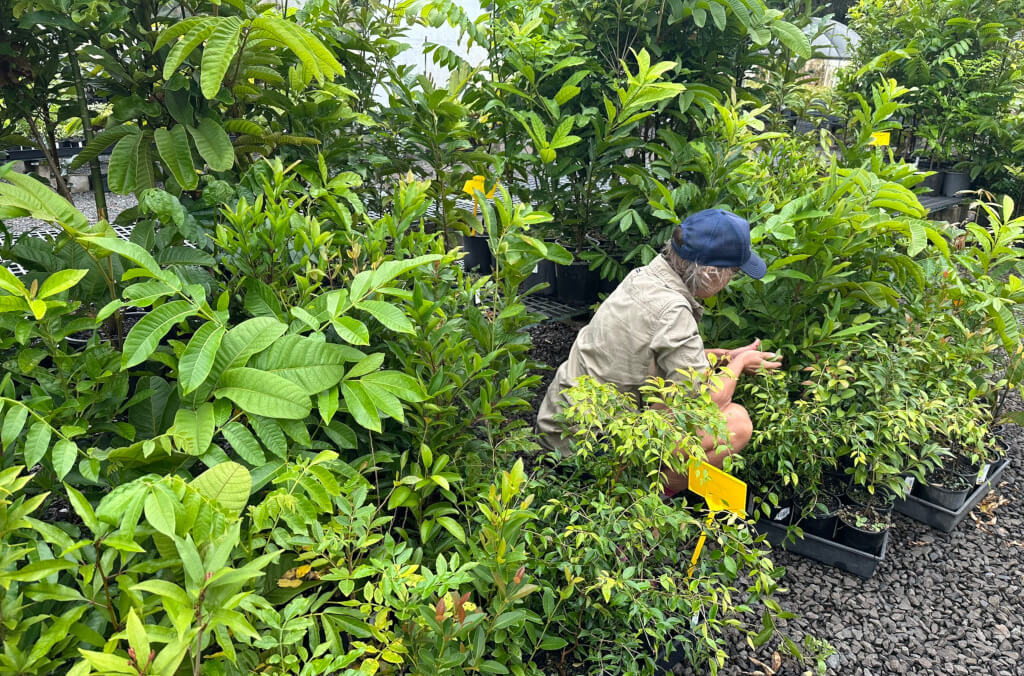
Plants grown for the Big Scrub Rainforest Conservancy’s genetically diverse living seedbank plantation. Photographer: Renee Borrow, Big Scrub Rainforest Conservancy.
“Only 1% of the original extent of the Big Scrub Rainforest remains, and what’s left occurs as small and isolated remnants,” says Renee. “Fragmentation has cut off much of the previous gene flow between plant populations and over time genetic diversity has declined.”
“We are using genetic information to tell us exactly where to collect propagule material from, sometimes even down to the exact tree,” says Renee. “For each of our 60 target species we’re striving to enhance genetic diversity, and hence resilience, so that this critically endangered ecosystem has the adaptive capacity to survive future threats such as climate change, new pests and diseases.”
“Our propagule collection team use the ReCER Field Collection app to record a range of metadata while they are out in the field collecting cuttings or seed from wild growing trees,” Renee says. “At the end of the day they simply export their data to an Excel csv file and send it through for upload to our Master Database.”
“The app allows customised information to be entered. In our case, we enter our own unique field codes into the app and duplicate each code on a permanent label that follows each propagule through the nursery and to its final planting position in the living seedbank plantation. This coding system allows us to link each plantation tree back to its original wild growing location and habitat attributes.”
Use the app to collect provenance information for your own seed collections
The ReCER Field Collection app is free for anyone to download and use to track provenance information for their own seed collections.
When you first log in, you have the option to select whether you are collecting for ‘Myself’, ‘ReCER’ or ‘Seedbank’. Select ‘myself’ and any data you collect using the app will be emailed to the email address you specify.
“We don’t see your data. It lives on your phone and is then emailed to you when you choose to export it from the app,” says Marlien.
“Once you have the data, you can store and manage it in a spreadsheet, or ideally, you would create a simple, project-specific web-based database that allows everyone in your team to upload their CSV files.”
Learn more at a free workshop
If you would like to learn more about how to use the collection app to meet your needs, an afternoon field session on using the ReCER Field Collection app is included in several upcoming workshops focused on using the Restore and Renew webtool to guide seed sourcing for resilient restoration.
Download the ReCER Field Collections App and register for a Restore and Renew workshop.