How to grow windflowers in your home garden
If you’ve admired the windflowers blooming at the Blue Mountains Botanic Garden at Mount Tomah, now’s the perfect time to try growing them at home. With minimal care and the right conditions, these beautiful plants will reward you for years to come.
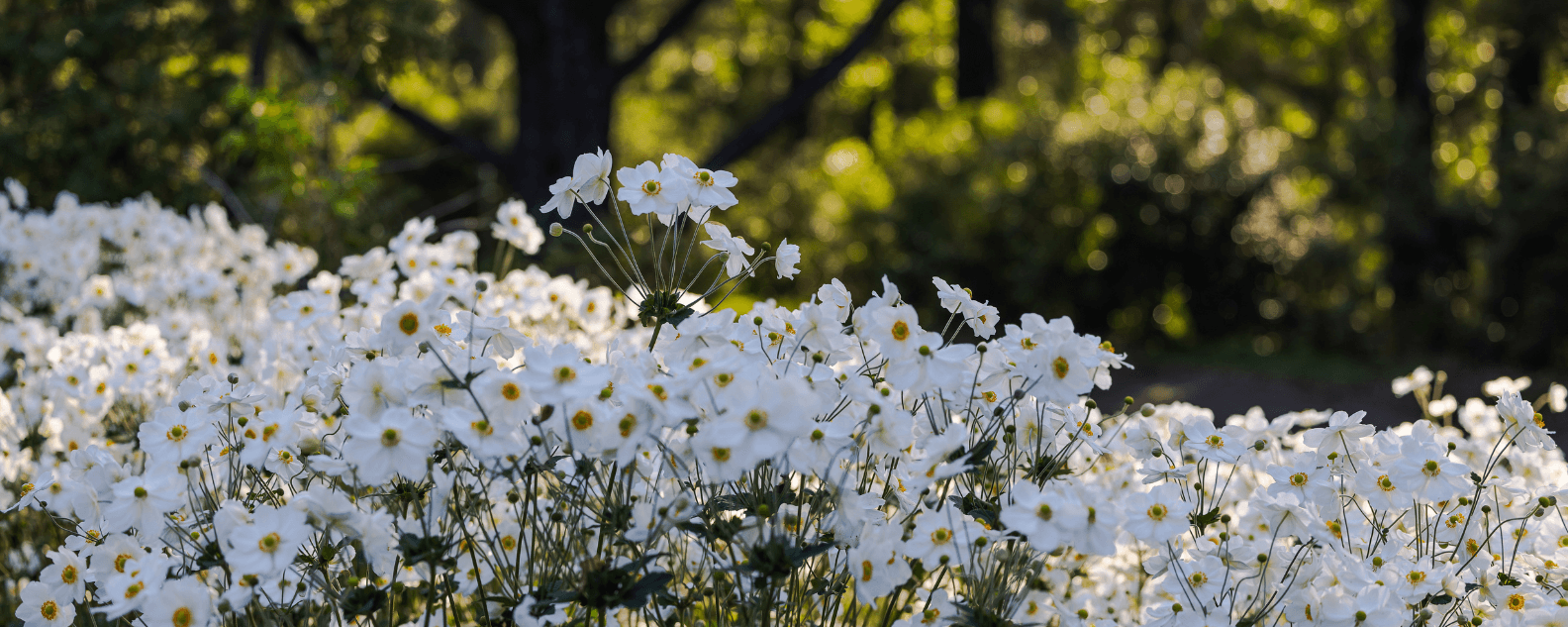
Each autumn, the Blue Mountains Botanic Garden at Mount Tomah transforms into a field of windflowers with delicate soft pink and white blooms that dance above lush green foliage.
They’re also known as anemones, but they’ve recently been reclassified and moved into the genus Eriocapitella. These elegant perennials are a highlight of the cool‑climate garden, and the good news is they’re surprisingly easy to grow at home.
With expert advice from Marion Whitehead, Supervisor of Ornamental Gardens and Nursery, here’s how you can successfully grow windflowers in your own garden.
Marion Whitehead, Supervisor of Ornamental Gardens and Nursery at the windflower display at the Blue Mountains Botanic Garden Mount Tomah
What are windflowers?
Windflowers, often called Japanese windflowers or anemones, are herbaceous perennials, meaning they die back after flowering and return year after year. They’re especially well-suited to cool‑climate gardens, making them a natural fit for the Blue Mountains and similar regions.
At Mount Tomah, some of the largest and most eye‑catching displays bloom from late summer through autumn, providing colour at a time when many other plants are slowing down and preparing for winter.
Environment selection for a healthy windflower garden
The key to growing healthy windflowers is putting them in the right place:
| Light | Windflowers prefer dappled shade or part shade, but they will tolerate sun, especially in cooler climates |
| Soil | They thrive in well‑drained, moist soil rich in organic matter |
| Climate | Best suited to cool to temperate climates rather than hot, arid conditions |
While they are relatively tough plants, windflowers don’t enjoy prolonged drought, so choose a position where they won’t dry out completely over summer.
One of the easiest ways to grow windflowers is by dividing existing clumps. This can be done once plants are established and healthy.
The key is to space new divisions about 15 centimetres apart, water well after planting and mulching lightly to help retain moisture and protect roots.
Once settled, windflowers will gradually spread and sometimes enthusiastically form large, graceful drifts over time.

How to keep your windflowers happy
Windflowers are famously low‑maintenance, making them ideal for both beginner and experienced gardeners.
| Watering | Provide occasional watering during dry spells, especially over summer |
| Feeding | Most gardens won’t need additional fertiliser if soil is healthy |
| Pruning | At the end of autumn or in early winter, cut back spent flower heads |
| Winter | Plants remain as leafy clumps through winter before re‑emerging the following season |
Each year, the wildflower display returns stronger than the last, with plants growing larger and producing more blooms. As the flowers spread across the landscape, they attract visitors from near and far who come to see the colour and activity.
While people enjoy the display, the most important visitors are the pollinator bees. The flowers provide a reliable late‑season food source, supporting native bees and European honeybees at a critical time of year and helping maintain the health of the local ecosystem.
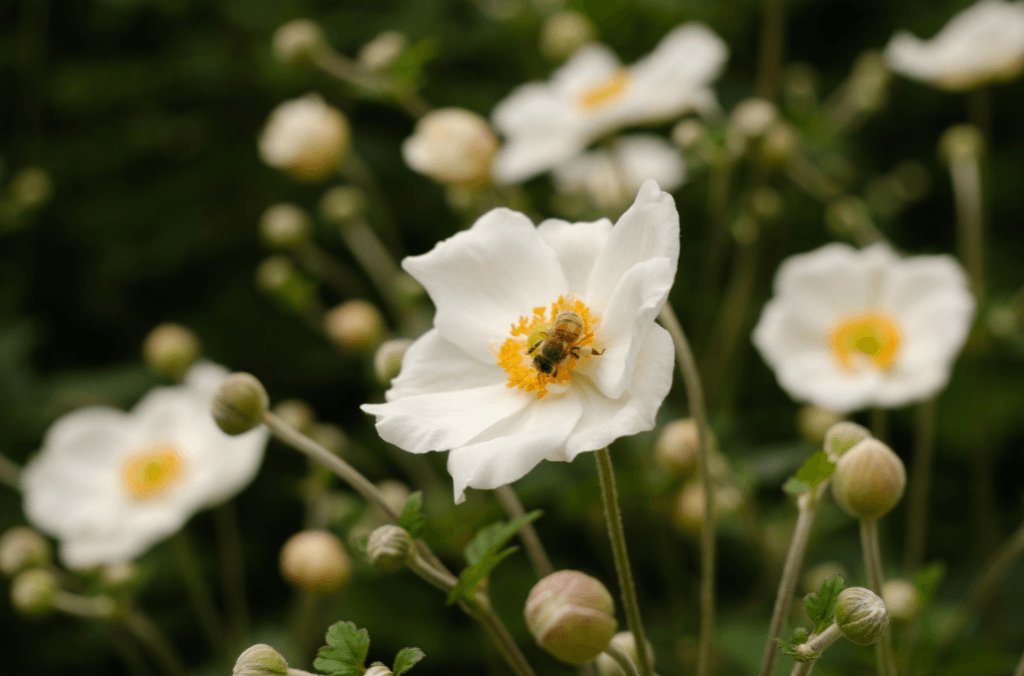
European honeybees and native bees love the windflowers pollen 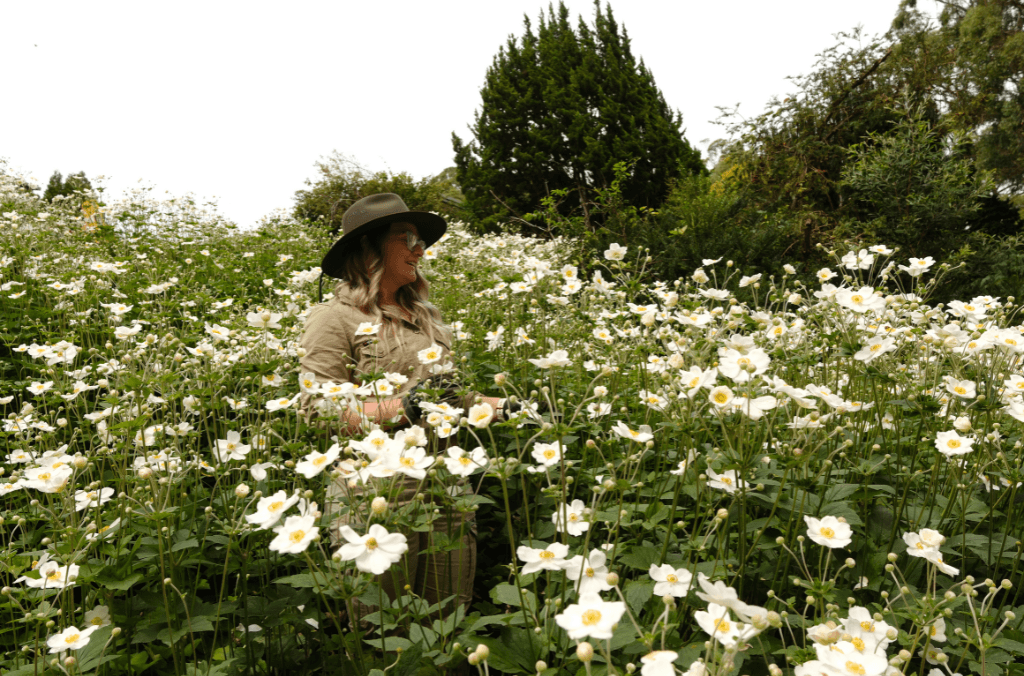
Marion Whitehead in the Residence Garden with the windflowers
Why do plant names change?
The scientific name for windflowers used to be Anemone japonica. Anemone comes from the Greek word for wind ‘nemos,’ and the dainty flowers do dance in the slightest breeze. It also stems from Greek mythology and according to legend, the flowers sprang up where the tears of Aphrodite fell into the blood of her fallen lover, Adonis. This gave windflowers a long‑held symbolism of great love and sorrow.
However, new scientific understandings of evolutionary relationships, largely driven by advances in DNA sequencing, often lead to the reclassification of plant species. Due to distinct taxonomic differences (particularly in their fruiting structures) windflowers were moved into a different genus and are now Eriocapitella hupehensis.
While it can be frustrating, by updating names to reflect evolutionary history, experts can prevent the loss of distinct, rare species that were previously hidden within larger, common groups.
For instance, research into the native Australian Leptospermum genus revealed that several species were not closely related to the core group, leading to the identification of new genera, such as Gaudium. This, in turn, helps to better manage the conservation and environmental impact of these trees.
Japanese windflowers or anemones have recently been renamed and are now in the genus Eriocapitella, which means 'woolly little head' derived from both Greek and Latin - Marion Whitehead
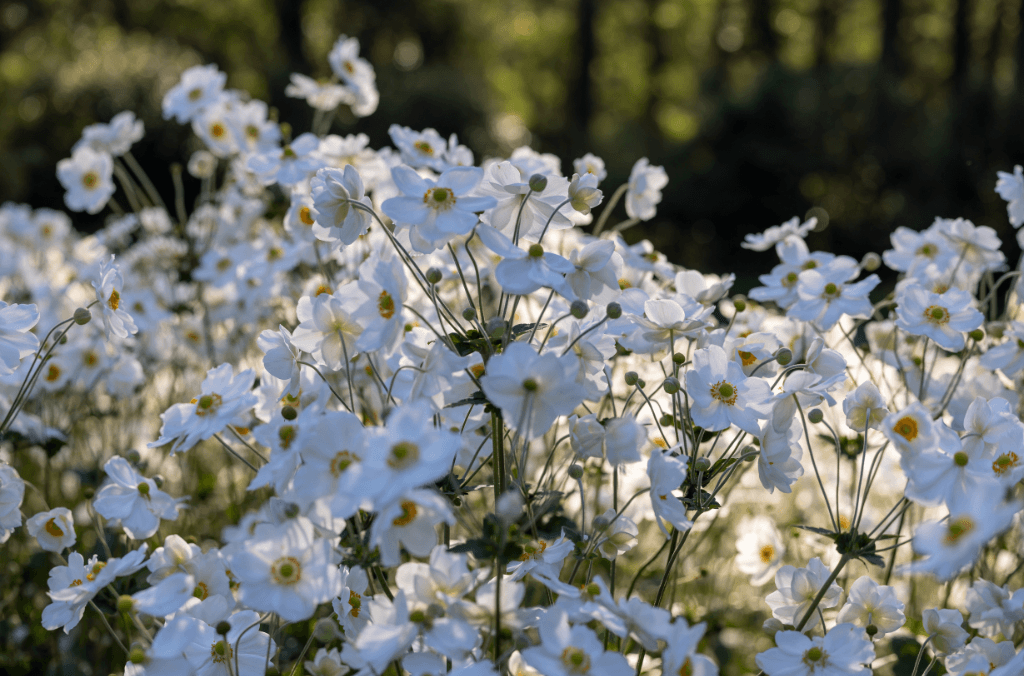
Close up of the beautiful white windflowers at the Blue Mountains Botanic Garden Mount Tomah
Want to see the magical field of white for yourself?
Plan your visit to the Blue Mountains Botanic Garden Mount Tomah this autumn. Breathe deeper. Escape to crisp mountain air, peaceful walks and autumn’s vibrant natural palette.
Related stories
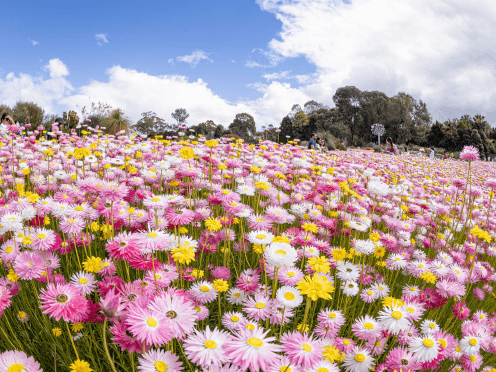
Discover the fascinating story behind Sydney's biggest paper daisy display and why these remarkable native flowers captivate visitors every year at Australian Botanic Garden Mount Annan.

In Antarctica’s frozen deserts, scientists are uncovering extraordinary fungi that survive where almost nothing else can, writes Professor Brett Summerell AM, Chief Scientist and Director Science, Education and Conservation.

Come behind the scenes on a botanical journey to preserve the first ever corpse flower in the National Herbarium of New South Wales.