A rare and poignant gem
As fascinating as the books housed at the Daniel Solander Library are, the journeys they have taken to arrive there can be just as intriguing, writes Miguel Garcia.
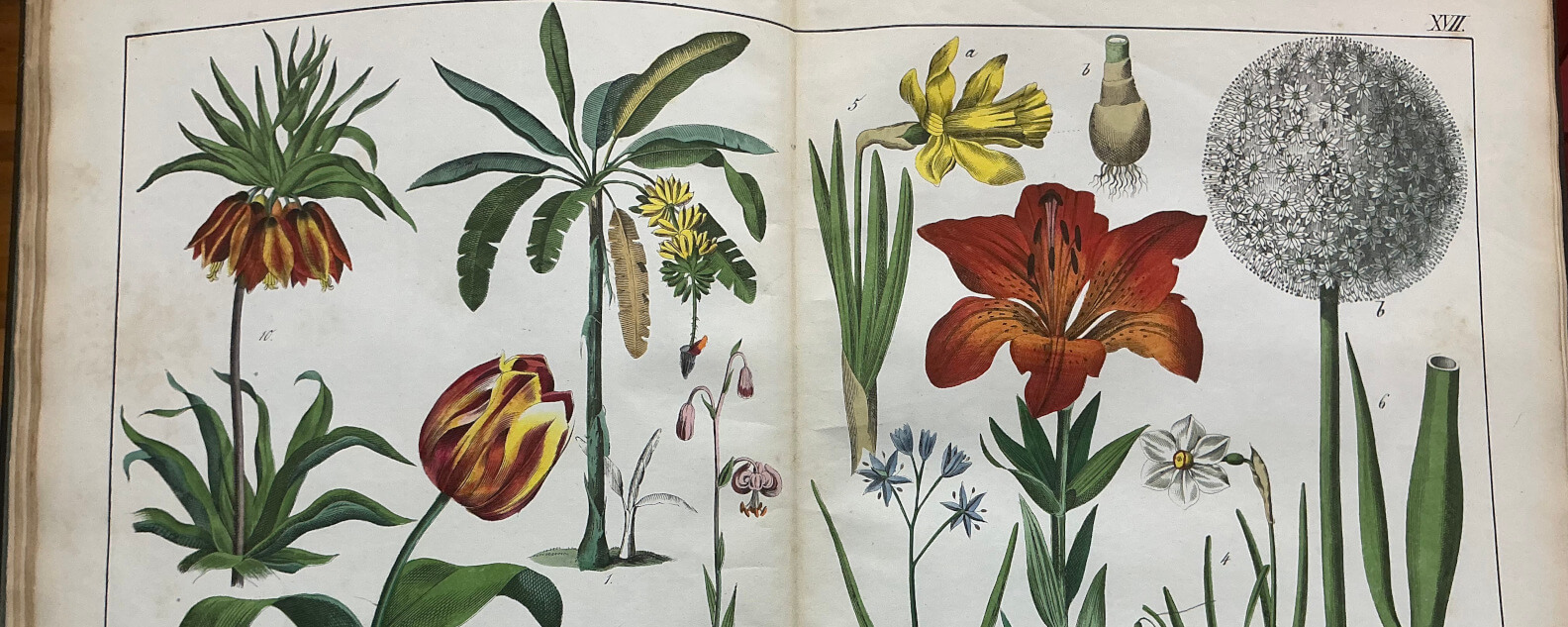
What do a World War II prisoner-of-war camp and a 19th–century book on botany have in common? On the face of it, they couldn’t be further apart. In reality, the connection is fascinating and poignant.
The 19th-century book on botany in question is the Naturgeschichte des Pflanzenreiches in Bildern (Natural history of the plant kingdom in pictures) and is held in our Daniel Solander Library. It is the work of Gotthilf Heinrich von Schubert, a physician, theologian and naturalist from the German state of Saxony. Published in parts in 1853- 1854, it is illustrated with 52 beautiful and vibrant folio colour plates of representative examples from the various plant, fungi and algal families.
A contemporary review of the work had this to say:
“The first instruction of natural history… must be conducted according to a specific method if it is to be fruitful. In addition to a theoretical presentation of what is to be learned… it is also absolutely necessary to present specific objects pictorially for a firmer fixation in the memory and a more precise understanding of their nature...
The more carefully such illustrations are selected and the more precisely they are executed in detail, and the more effort is put into captivating the senses, the greater the success will be achieved… many things must first be made understandable and comprehensible in order to awaken their interest in details that are mostly unknown or incomprehensible to them, and to lead them to an understanding of the whole.
What we have said about illustrations for teaching natural history in general applies particularly to those on the natural history of the plant kingdom. With particular satisfaction, we can recommend a work of illustration that perfectly corresponds to this… contains a numerous series of illustrations… which, as accurately and faithfully sketched as beautifully illuminated, provide an overview of the main orders and stages of development of the plant kingdom.”
Though there are about six later editions, the book in question is a very rare first edition, with only two other libraries in Australia holding a copy. However only this copy has such a curious and compelling history. The book came into the possession of the Daniel Solander Library through the generosity of a Dutch Australian, Martin Adrian Kaub, in 1976. Kaub, a chemical engineer, had lived in the Dutch East Indies (present-day Indonesia) before the Second World War. At some point during the escalation towards war, Kaub joined the Royal Netherlands Marines or Korps Mariniers. Japanese forces invaded in December 1941 with the fiercest fighting in Java in February and March 1942, where they were overwhelmed by the larger, better-equipped Japanese forces and ultimately surrendered in March 1942.
The Dutch prisoners were interned along with other allied soldiers at the infamous Changi prisoner-of-war camp at Singapore, Kaub among them. The conditions at Changi were terrible. Systematic starvation, rampant disease, overcrowding, and brutal treatment. But there were glimmers of hope. The International Red Cross managed to send parcels of letters from families, food, clothing, medicine, books and magazines, though many were hoarded by the Camp administrators, making the distributions a rare and significant event.
In the personal letter which accompanied the donation of this book the following is written.
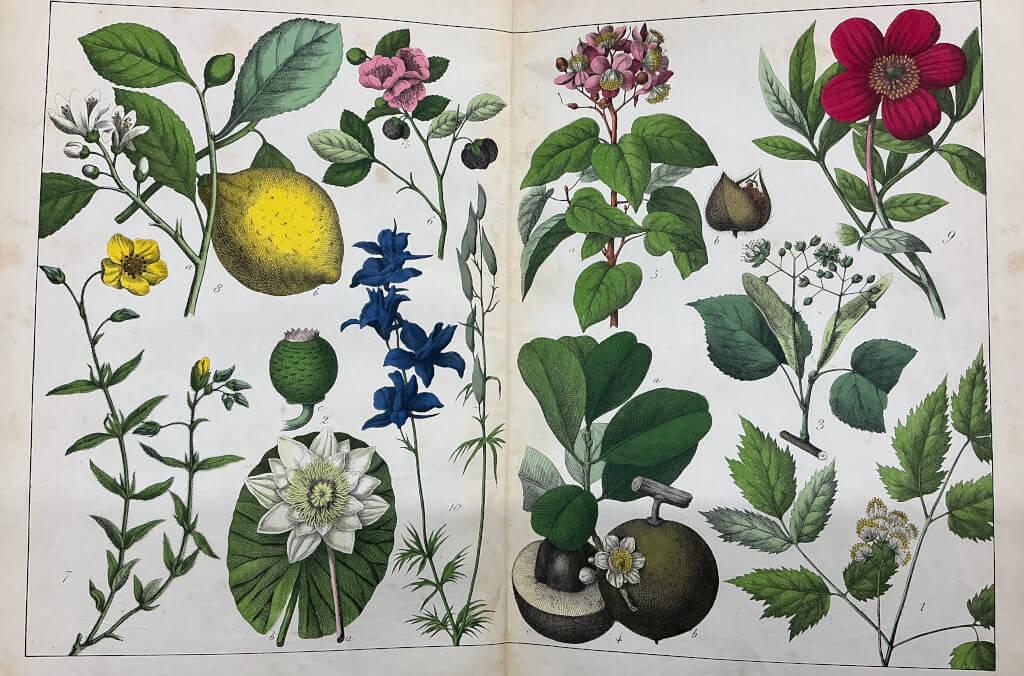
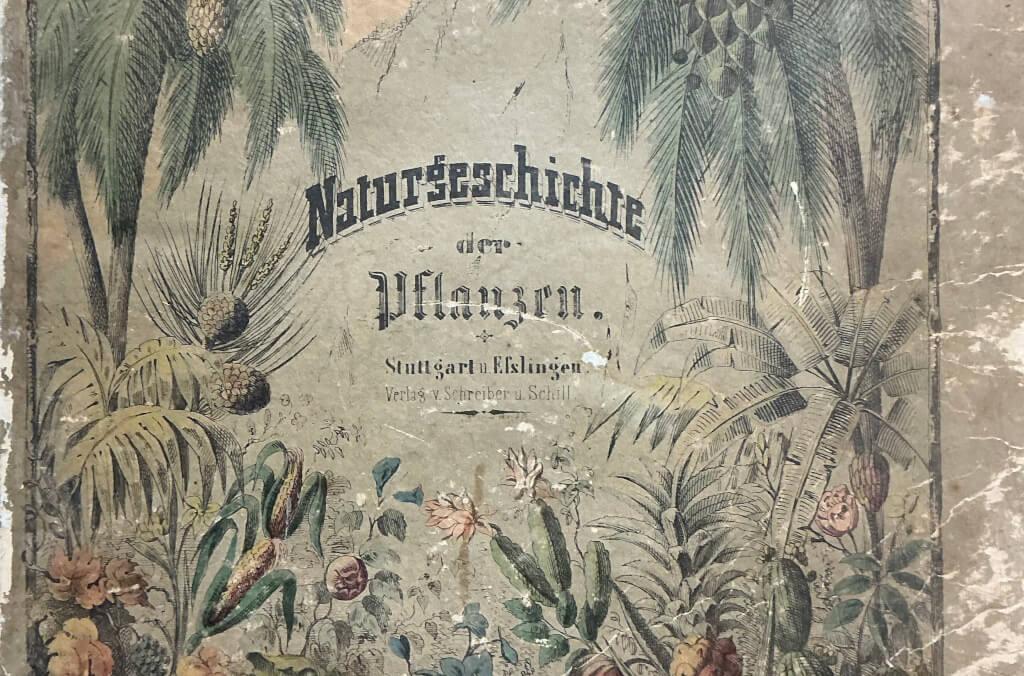
“Mr Kaub noticed this volume which came through his hands with some books for distribution as comforts for the P.O.W. Thinking it was too valuable to be lost or destroyed in the camp conditions of the time, Mr Kaub retained the volume and managed to bring it out of the camp [at the end of the war].”
How Martin Kaub managed to keep the book intact through the awful vagaries of the camp is somewhat of a miracle. One can imagine that for Martin and his fellow prisoners, the book must have given a rare glimpse of colour and beauty in such a dark environment.
Mr Kaub survived the horrors of Changi and eventually came to settle in Katoomba, Australia with his wife Elizabeth (Betty), with whom he raised two sons. He also became involved in local conservation efforts with the Colong Committee’, a National Wilderness Society.
There, he and his wife Betty “…formed a team which poured information on both the Colong and Boyd struggles in to the Committee. Together they wrote many of the letters which helped build up the political pressure required for the successful outcome in each case.”
Even up to the age of 68, Martin Kaub was planning a trip to the Border Ranges for a fact-finding mission to help the local conservation campaign. Sadly, it was around this time that he fell fatally ill and died soon after.
We will forever be grateful to Martin Kaub in finding, protecting and donating this precious and exquisite work to the Library, not just as a work of botany but as a rare and poignant example of the juncture of science, history and culture.
This story was originally published in The Gardens, the quarterly magazine of Botanic Gardens of Sydney.
Get it delivered to your door by becoming a member. Published four times a year and aligned with the seasons, the 36-page print magazine balances expert insight with accessible, engaging storytelling, offering members a deeper connection to one of Australia’s most loved public institutions.
Enjoy discounts, exclusive events and experiences, and the knowledge that you are part of a passionate community making a difference.
Related stories
Discover the fascinating story behind Sydney's biggest paper daisy display and why these remarkable native flowers captivate visitors every year at Australian Botanic Garden Mount Annan.
In Antarctica’s frozen deserts, scientists are uncovering extraordinary fungi that survive where almost nothing else can, writes Professor Brett Summerell AM, Chief Scientist and Director Science, Education and Conservation.
Come behind the scenes on a botanical journey to preserve the first ever corpse flower in the National Herbarium of New South Wales.